July 31, 2026 • Margot Vellacourt • 11 min reading time • Prices verified June 4, 2026
Bag-Based vs. Drawer-Based Waste Systems: Which Self-Cleaning Design Actually Wins
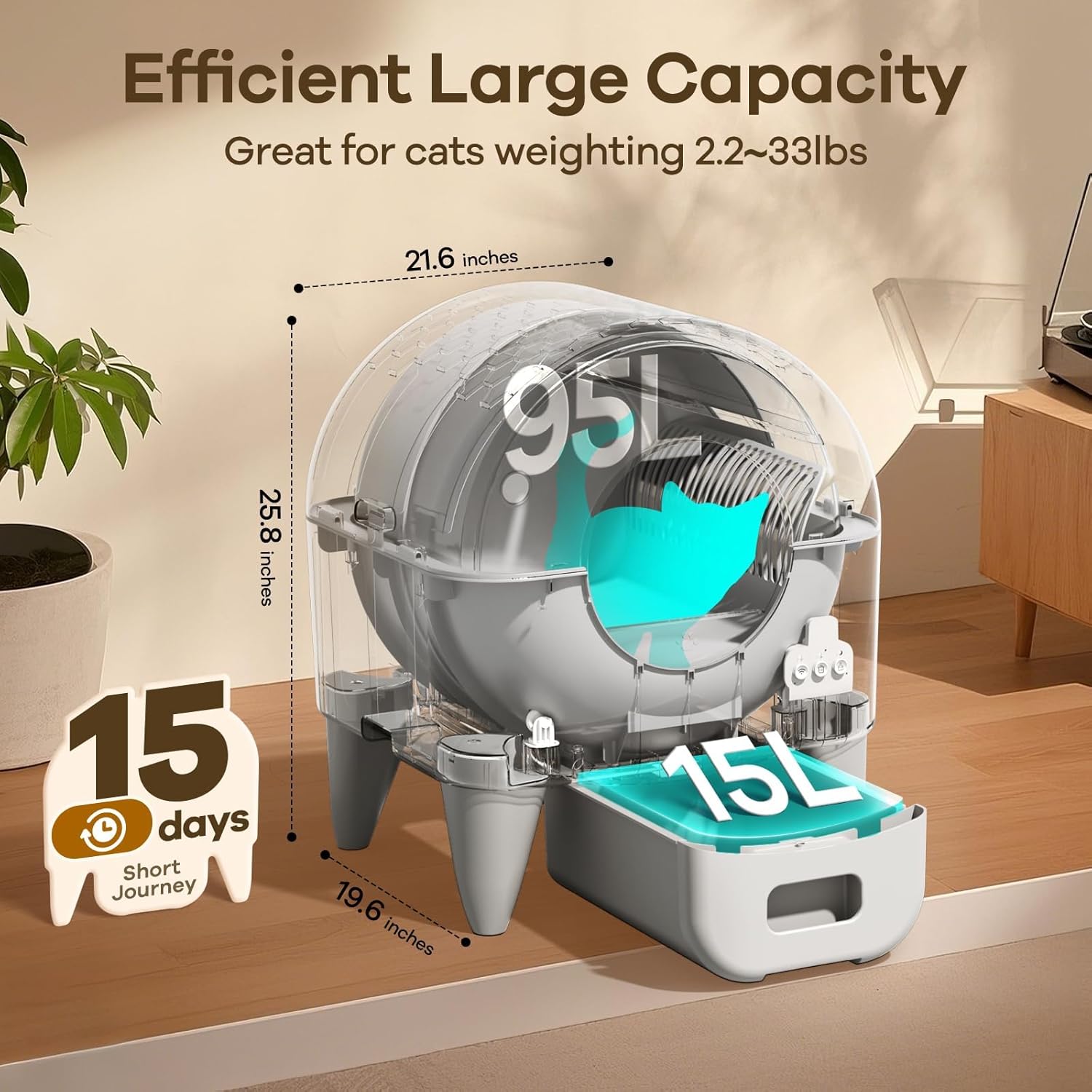
If you’ve ever watched a self-cleaning litter box finish its cycle and wondered where the waste actually goes, you’re asking exactly the right question. These automated units — motorized boxes that sift, rotate, or rake clumps away from clean litter on a timer or after each cat visit — don’t magically dispose of anything. They just move waste from one place to another, and how they do that determines roughly 80% of your daily maintenance experience. There are two dominant approaches on the market right now: bag-based systems, where the mechanism seals clumps into a liner or bag you pull out and toss, and drawer-based systems, where waste drops into an open or loosely covered bin that you periodically empty into your regular trash. This article is about which approach holds up in a real multi-cat household — not just on spec sheets, but over weeks and months of actual use.
If you’re already deep into researching units in the $199–$699 range, you’ve probably noticed that the waste-containment story is buried in the marketing. Let’s dig it out.
How the Two Systems Actually Work
A bag-based system typically wraps or packs clumps into a dedicated liner — either a rotating cartridge-style bag or a simple replaceable liner that sits inside the waste chamber. After each cycle or manually on demand, you pull the liner out, it’s sealed or self-contained, and you toss it. No scooping, no direct contact with waste, and theoretically no odor transfer between emptyings.
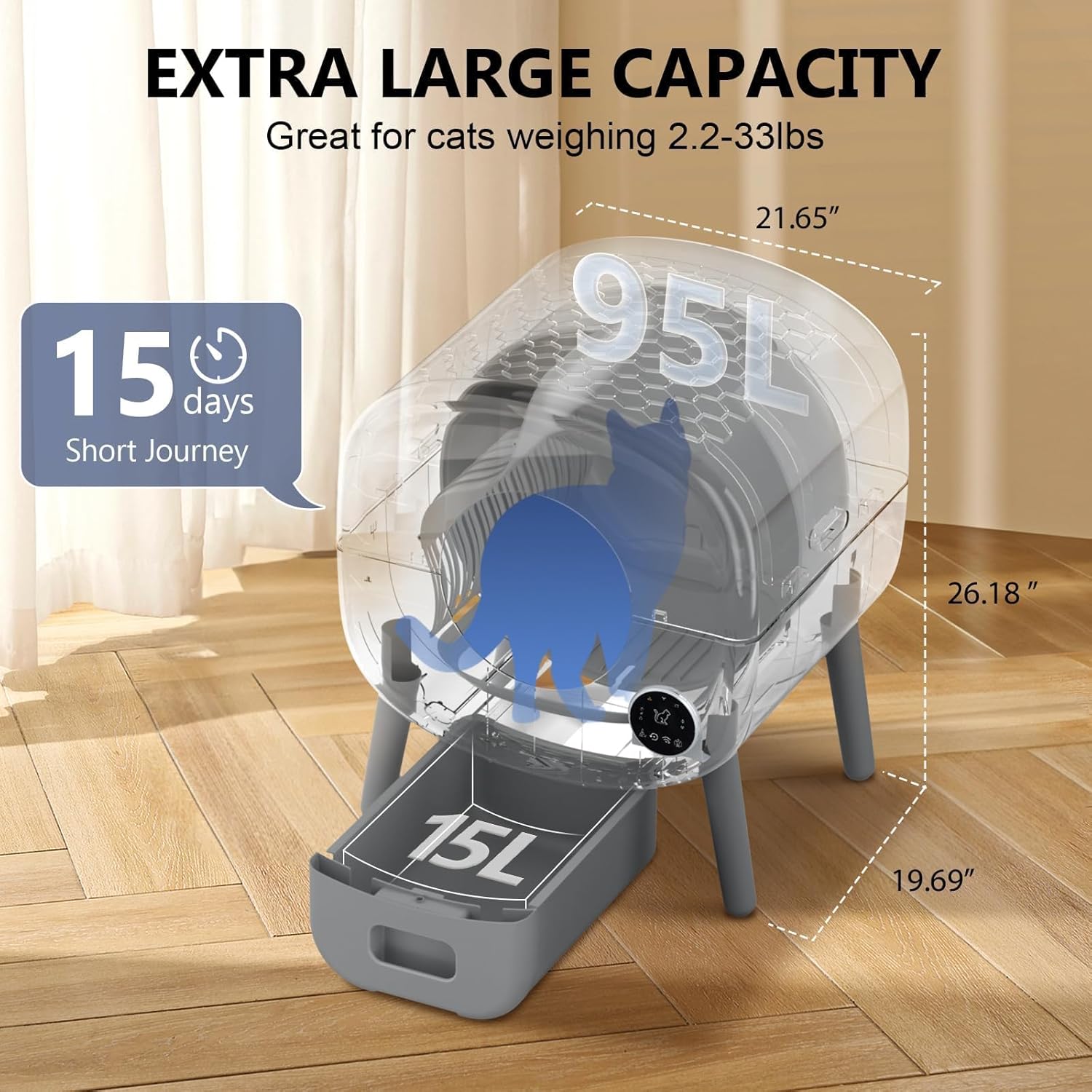
A drawer-based system — most famously associated with globe-style units like the Litter-Robot line — deposits waste into an open plastic drawer beneath or behind the globe. The drawer is accessible via a pull-out panel; you line it with a standard kitchen trash bag and empty it every few days to a couple of weeks depending on cat count. The waste itself sits exposed inside that drawer between emptyings.
The distinction sounds simple, but it produces dramatically different day-to-day experiences around three variables: odor management, consumable cost, and mechanical reliability. The right answer for your household depends on how you weight those three.
Odor, Cost, and Reliability: A Side-by-Side Look
Odor Management by System Type
This is where the debate gets sharp. Bag-based advocates argue that sealing waste at the point of deposit is the only real solution — the clump never sits exposed, so there’s no accumulating odor source between maintenance cycles. Owners of bag-sealing units frequently cite this in aggregated reviews, noting a “no mess and no smell” experience as the reason they switched away from open-drawer designs. Buyers with asthma sensitivity to dust and ammonia — a concern flagged in Modern Cat’s buyer’s guide “The Best Automatic Litter Boxes for Every Budget” — consistently identify a sealed-bag format as meaningfully reducing air exposure windows compared to uncovered drawer designs.
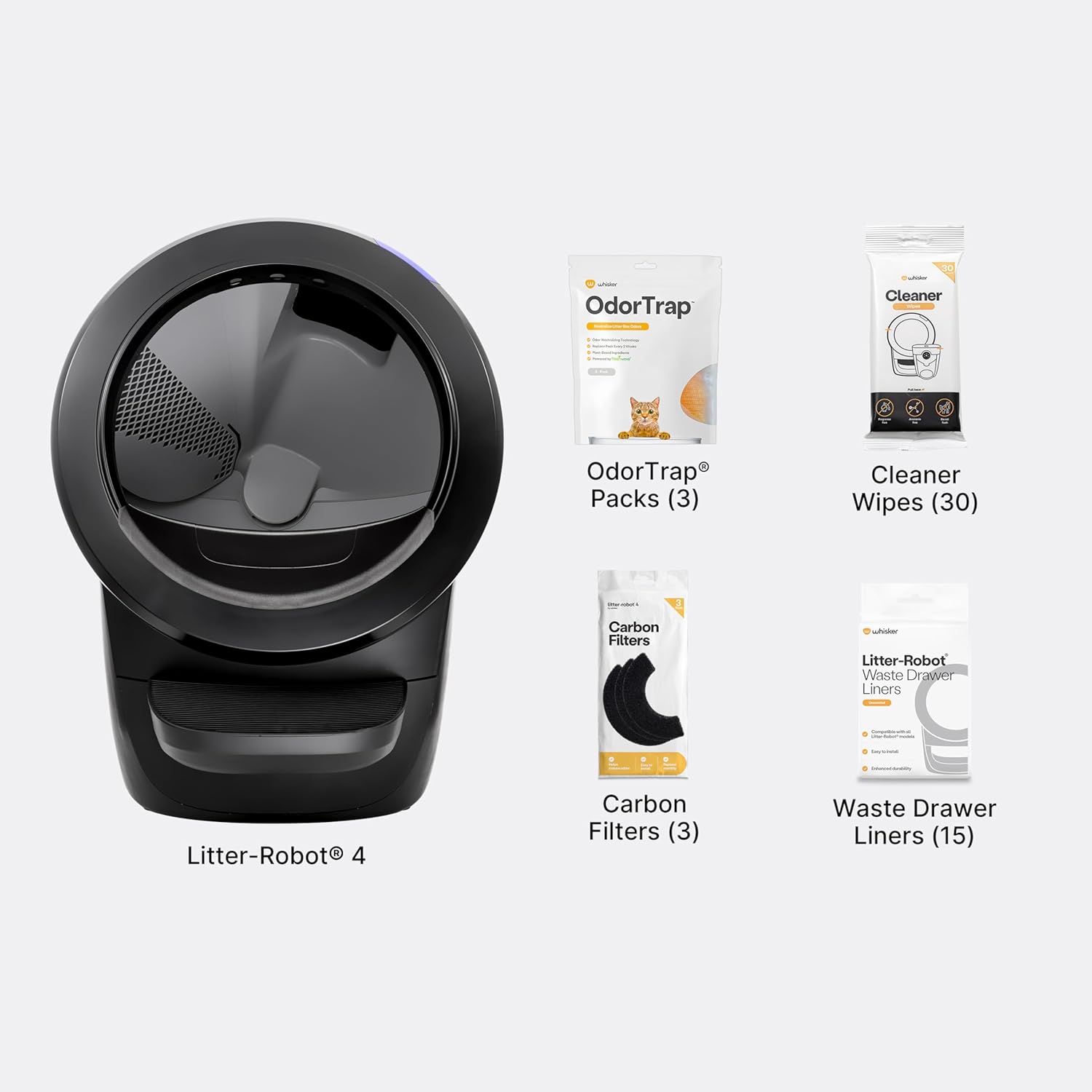
Drawer-based systems ask you to trust carbon filtration and a sealed-lid design to contain odors between emptyings. The most sophisticated version of this is the OdorTrap pod system found in Whisker’s Litter-Robot 4 — a carbon and odor-neutralizing cartridge that sits inside the waste drawer. Here’s the honest truth that manufacturer marketing softens: the OdorTrap pod is not optional for most households. The Spruce Pets’ buyer’s guide “Best Self-Cleaning Litter Boxes” and aggregated owner reviews both reflect this pattern — the pod transforms the drawer from a liability into a workable system, but it adds meaningfully to your recurring cost calculus.
The practical implication: if you have two cats and you’re emptying the Litter-Robot 4 drawer every 10–14 days, that drawer is accumulating two weeks of ammonia exposure inside your home. The OdorTrap pod handles it — but only if you’re replacing it on schedule.
Cumrige
$199.99
In stock on Amazon
Check price on AmazonConsumable Cost by Tier
This is where bag-based systems take a hit. The convenience of pull-and-toss has a line item attached to it.
| System Type | Consumable | Frequency (2 cats) | Est. Annual Cost | Tier |
|---|---|---|---|---|
| Bag-based (budget/mid) | Proprietary liner bags | Weekly–biweekly | $80–$150/yr | Cumrige — $199.99 |
| Drawer-based (Litter-Robot 4) | OdorTrap pods + trash bags | Pod monthly, bag biweekly | $60–$90/yr | Petcove — $359.99 |
| Drawer-based (budget, e.g. PetSafe SmartSpin) | Carbon filters + standard bags | Filter monthly | $30–$50/yr | Cumrige — $199.99 |
Bag-based systems typically require proprietary liners — you can’t substitute a generic kitchen bag because the mechanism is engineered around a specific liner size, material, and seal. If that manufacturer discontinues the product or raises prices, you’re either locked in or shopping for a new unit. This is a real long-term risk that Pet MD’s article “Self-Cleaning Litter Boxes: Are They Worth It?” flags as a key buyer’s consideration: always confirm consumable availability and cost before purchasing, not after.
Drawer-based systems let you use any appropriately sized trash bag. The Litter-Robot 4’s OdorTrap pod is proprietary, but the drawer itself functions without it — you’re making a trade between odor management and cost, not facing a binary lock-in.
For a household on a three-to-five year ownership horizon, drawer-based systems generally win on consumable economics. For owners who genuinely value the no-contact, pull-and-toss workflow, the premium may be worth it — but price out liner costs before you commit.
Petcove
$359.99
In stock on Amazon
Check price on AmazonMechanical Reliability by Design
No waste system is maintenance-free, and understanding the failure modes before you buy is the practitioner’s advantage.
Bag-based units at the budget tier draw consistently positive reviews for convenience, but multiple owners across aggregated review threads — reflected in coverage by The Spruce Pets’ buyer’s guide “Best Self-Cleaning Litter Boxes” and iHeartCats category roundups — report mid-cycle stalls. The mechanism partially rotates, the bag seal doesn’t complete, and you’re left with a half-exposed waste chamber. This is more common when litter is overfilled or when the liner has shifted. The fix is usually manual intervention — rotating the globe back, reseating the liner — but it defeats the automation premise if it’s happening weekly.
The PetSafe SmartSpin, a drawer-based mid-range option, carries a specific and well-documented complaint from owners: a sticky rubber base piece that causes litter to clump and bind at the chamber-to-drawer transition point. This failure mode appears consistently enough in owner reviews that Apartment Therapy’s roundup “We Tested 5 Self-Cleaning Litter Boxes” flags mechanical reliability as a concern for the unit. If litter is bridging the discharge path, the drawer fills unevenly and may jam.
The Litter-Robot 4’s drawer mechanism, by contrast, benefits from years of engineering iteration. Complaints that appear in long-run reviews are more often about sensor sensitivity or WiFi connectivity, not waste drawer jams. If mechanical dependability is a primary concern, the market data consistently favors the Litter-Robot ecosystem over budget alternatives, regardless of waste system type.
Litter-Robot
$749.00
In stock on Amazon
Check price on AmazonVolume Math: Large Cats and Multi-Cat Households
The advertised emptying intervals assume an average cat producing average waste volume. If you have a 15-pound Maine Coon, or four cats in a one-bathroom arrangement, those intervals compress meaningfully.
Owners of very large cats — consistently defined in the 14–20+ pound range in buyer reviews and editorial roundups — report that bag-based units fill noticeably faster than spec’d. A typical two-cat cadence of every-few-days liner changes can become every-other-day with a single large cat producing outsized waste. For a three-cat household, some owners report daily liner changes — which erodes the convenience argument entirely and makes the consumable cost sting harder.
Drawer-based systems handle large-volume households better in one specific way: the drawer capacity is fixed and visible, so you can see how full it’s getting and adjust your schedule. You’re not dealing with a liner that’s technically full but not obviously so.
The practical rule: take whatever interval the manufacturer advertises and divide by 1.5 for a two-cat household with at least one large cat, or divide by 2 for three or more cats. Then decide if that cadence works for your life.
Modern Cat’s guide “The Best Automatic Litter Boxes for Every Budget” and The Spruce Pets’ “Best Self-Cleaning Litter Boxes” both note that advertised cleaning intervals are based on single-cat households with cats of typical size — a point that’s easy to miss in spec-sheet comparisons.
Which Waste System Fits Your Household?
The Budget-Tier Bag-Based Case
If you’re spending under $250 on a self-cleaning unit, bag-based designs in this range — the Fumoi and Cumrige are representative options — offer a compelling no-contact workflow at a low upfront price. The trade-off is that liner costs accumulate faster than most buyers anticipate, and mid-cycle stalls are more common in budget bag-sealing mechanisms than in premium alternatives. These units work well for single-cat households with predictable waste volume and owners who change liners frequently enough not to push the seal mechanism.
Pet MD’s “Self-Cleaning Litter Boxes: Are They Worth It?” specifically advises confirming that proprietary consumables are available from multiple retailers before purchasing any bag-based unit — sound advice that applies here especially.
Cumrige
$199.99
In stock on Amazon
Check price on AmazonThe Mid-Tier Drawer-Based Case
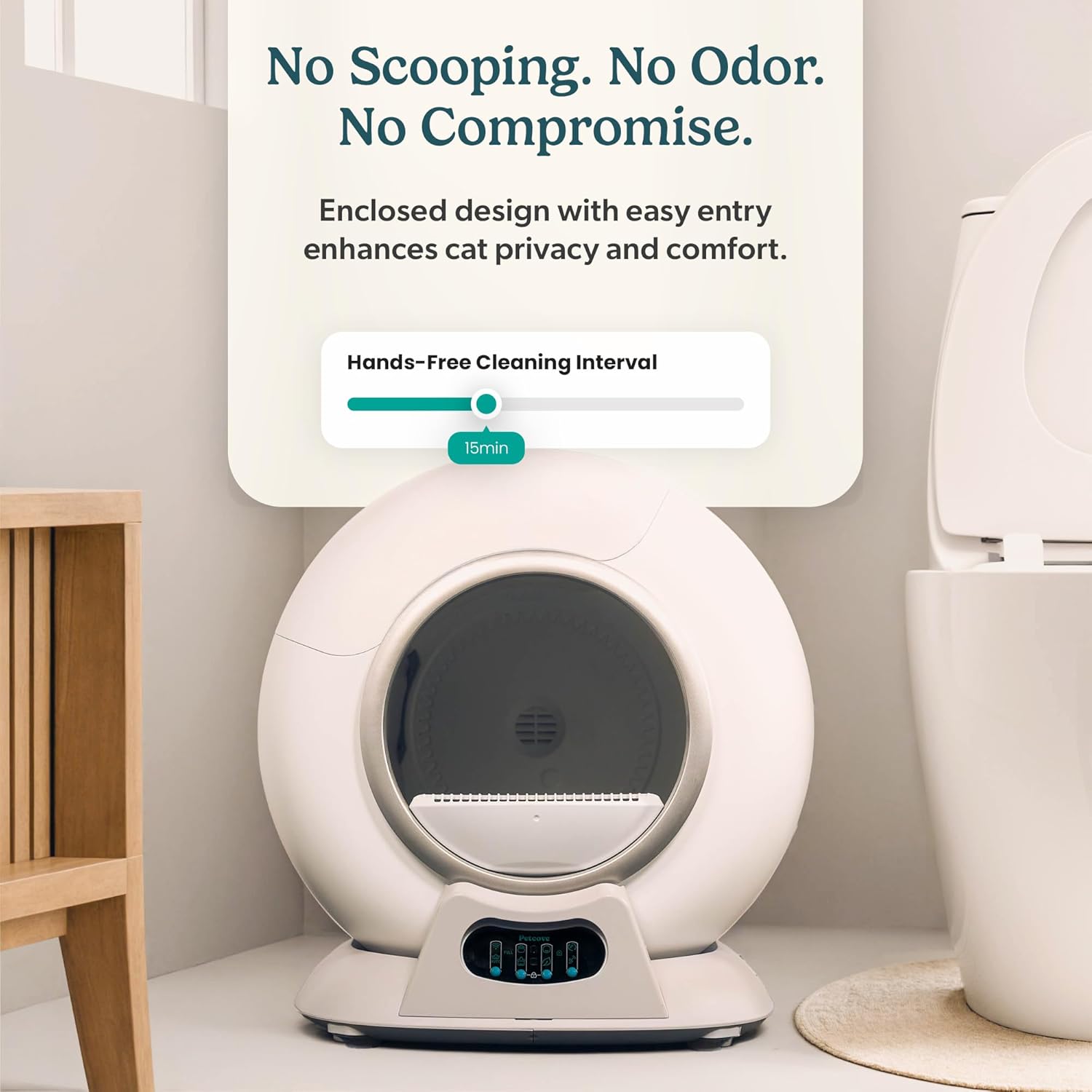
In the $250–$450 range, drawer-based units represent the strongest value for most multi-cat households. Carbon filtration manages odor adequately when maintained on schedule, standard trash bags keep recurring costs low, and the drawer mechanism is generally more durable than budget bag-sealing alternatives. The PetSafe SmartSpin falls in this tier and earns positive marks for ease of setup and overall concept — but the sticky rubber base complaint documented by Apartment Therapy’s “We Tested 5 Self-Cleaning Litter Boxes” is worth reading before committing. If that failure mode appears in current owner reviews of your specific purchase window, treat it as a known risk.
Petcove
$359.99
In stock on Amazon
Check price on AmazonThe Premium Drawer-Based Case
The Litter-Robot 4 is the reference standard for drawer-based systems and the product most directly compared against bag-based alternatives in editorial roundups including The Spruce Pets’ “Best Self-Cleaning Litter Boxes.” Its drawer engineering is mature, its OdorTrap pod system genuinely controls odor when maintained, and its failure modes are well-documented after years of widespread ownership. The honest caveat: budget for OdorTrap pods as a recurring line item, not an optional upgrade. For households with two or more cats where odor and mechanical reliability are primary concerns, the premium price reflects real engineering advantages over both budget bag-based units and mid-tier drawer designs.
Litter-Robot
$749.00
In stock on Amazon
Check price on AmazonFrequently Asked Questions
How often do you actually have to change the bag or empty the drawer with two or three cats? For two average-sized cats, bag-based owners typically report liner changes every 3–5 days. Drawer-based Litter-Robot 4 owners report emptying every 10–14 days. Three cats compress those windows to roughly 2–3 days (bag) and 7–10 days (drawer).
Does the waste bin smell between changes even with a sealed bag? A well-sealed bag system dramatically reduces ambient odor because waste isn’t sitting exposed. Drawer-based systems manage odor through filtration — the Litter-Robot 4 with an OdorTrap pod in good condition performs well, but owners are nearly unanimous that skipping the pod produces detectable odor within a few days.
Are replacement liner bags a recurring cost I need to budget for? Yes, and this is frequently underestimated. Proprietary liners for bag-based systems typically run $80–$150 annually for a two-cat household. Always confirm that liners are readily available from multiple retailers before purchasing a bag-based unit.
Is the Litter-Robot 4 waste drawer truly odor-free, or does it need the OdorTrap pod to work properly? It needs the pod to work properly in most households. The drawer design alone is not airtight. Owners who skip the OdorTrap consistently report noticeable odor, especially as the drawer fills past the halfway point. Factor the pod into your annual ownership cost — it’s functionally a requirement, not an optional upgrade.
Can a very large cat’s waste volume overwhelm these systems faster than advertised? Yes. A 20-pound cat produces meaningfully more waste than the average 10-pound cat used in manufacturer estimates. Owners of large breeds consistently report shorter intervals and, in some cases, mid-cycle struggles with bag-based units that have smaller-capacity liners.
What happens when the bag mechanism jams mid-cycle? On budget bag-based units, a mid-cycle stall typically requires manual intervention: open the unit, rotate the globe manually back to the starting position, recheck the liner seating, and restart. Most manufacturers recommend powering off before any manual intervention — reaching into a partially-rotated unit is how accidents happen.
The Decision Rule
Here’s the clean version: if odor containment is your primary concern and you’re willing to pay a consumable premium for a no-contact workflow, a bag-based system from a brand with confirmed liner availability is worth evaluating seriously. Sealed-bag designs earn consistent praise for this use case from owners with sensitivity to ammonia or dust. If you have a large multi-cat household and want the lowest long-run cost with strong mechanical reliability, a mature drawer-based system wins — but budget for odor-control consumables as a line item, not a nice-to-have. If you’re in the budget tier and considering a drawer-based unit with documented mechanical complaints, read current owner reviews carefully before committing; known failure modes don’t always get fixed between production runs.
Neither system is universally better. The right one is the one whose maintenance rhythm you’ll actually stick to — because a self-cleaning box you stop servicing on schedule is just an expensive box that smells.