August 2, 2026 • Margot Vellacourt • 11 min reading time • Prices verified June 4, 2026
The Breeze System Deep Dive: Pellets, Pads, Refills, and Real Alternatives That Cost Less
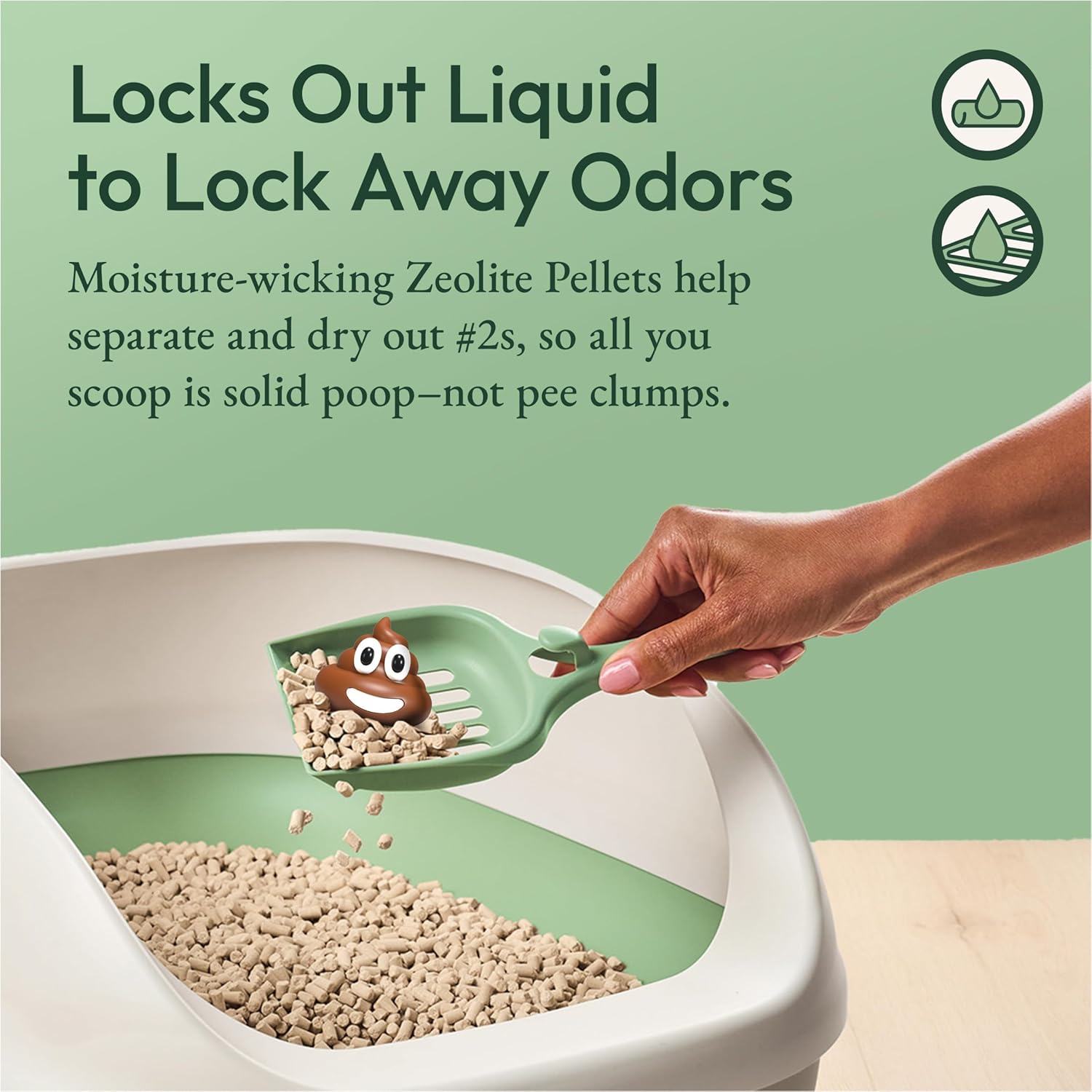
If you’ve ever watched your cat step out of the litter box and immediately caught a wall of ammonia smell, you already understand the problem the Tidy Cats Breeze system is trying to solve. Here’s how it works in plain terms: instead of a box full of clumping litter that traps everything together, Breeze uses two separate layers. Hard plastic pellets sit on top — they let liquid fall straight through while solid waste stays on the surface. Below the pellets, an absorbent pad soaks up the urine and locks in the odor. The idea is that by separating liquids from solids, you neutralize the biggest odor source (ammonia from urine) at the pad level, while scooping solids from the top becomes a quick daily task. Simple concept. Solid engineering in principle. The catch, as owners across long-term reviews consistently point out, is in the refill math — and that’s exactly what this article is going to untangle.
If you’re running two or more cats and staring at the Breeze refill aisle, you’ve probably already done a rough calculation and felt uneasy. You should trust that instinct. Let’s run the real numbers, look at the owner-discovered hacks that meaningfully extend consumable life, and compare the three tiers of alternative approaches worth taking seriously.
| EDITOR'S PICKPurina Tidy Cats Scented Litter… | Mid-tierPurina Tidy Cats Breeze Litter… | Budget pickHoney Care All-Absorb Cat Litte… | |
|---|---|---|---|
| Material | Scented pellets | — | Zeolite |
| Weight | 7 lb | 7.91 lb | 14 lb |
| Pack size | 4 bags | 1 box | 1 pack |
| Odor control | Scented | — | Long-lasting |
| Price | $84.68 | $29.97 | $27.99 |
| See on Amazon → | See on Amazon → | See on Amazon → |
How the Breeze System Actually Works (and Where the Odor Win Comes From)
The pellet-and-pad separation mechanism isn’t magic — it’s zeolite chemistry doing the heavy lifting. Zeolite is a naturally porous mineral compound that physically traps ammonia molecules rather than masking them with fragrance. As covered in The Spruce Pets’ editorial overview titled “Zeolite Odor Control in Cat Litter: How It Works,” zeolite’s crystalline structure gives it an unusually high surface-area-to-volume ratio, which is why even a modest volume of pellets can absorb a significant odor load. The pellets stay dry, the pad handles the liquid, and the ammonia never gets the oxygen exposure it needs to off-gas aggressively into the room.
This separation mechanism is also the reason Breeze gets recommended specifically for cats managing kidney disease. PetMD’s editorial coverage of chronic renal failure in cats — in a piece titled “Kidney Disease in Cats: Symptoms, Causes, and Treatment” — notes that affected cats produce significantly higher urine volumes, making ammonia control a genuine quality-of-life concern both for the cat (ammonia irritates respiratory tracts) and the owner. Isolating urine into a sealed absorbent pad that can be discarded cleanly makes a meaningful practical difference in households managing a medically compromised cat, and the pad’s saturation level provides a rough visual indicator of urine volume that can flag changes worth discussing with a veterinarian.
Catvills’ guide titled “How to Transition Your Cat to a New Litter Type” notes that most cats adapt to non-clumping substrates within ten to twenty-one days when introduced gradually using a blended substrate approach. That timeline aligns with what long-term Breeze owners consistently report: roughly two weeks of mixed old-litter and pellets before most cats accept the pure pellet surface without hesitation.
The Refill Math: What Two or Three Cats Actually Cost You
This is where honest analysis earns its keep. The Breeze system has a seductive sticker price on the tray hardware, but the consumable structure is where the real commitment lives. Here’s the baseline math for a standard two-cat household at 2026 pricing:
Breeze Annual Consumable Estimate — Two-Cat Household
| Consumable | Replacement Frequency | Annual Units | Approx. Annual Cost |
|---|---|---|---|
| Breeze standard pads (10-pack) | Every 3–5 days (2 cats) | ~70–100 pads | $90–$140 |
| Breeze Extra Strength pads (10-pack) | Every 5–7 days (2 cats) | ~65–80 pads | $110–$135 |
| Breeze pellets (3.5 lb bag) | Every 20–25 days (2 cats) | 15–18 bags | $90–$110 |
| Total (standard pads + pellets) | — | — | $180–$250 |
Compare that to a two-cat household running a mid-quality clumping litter at roughly fifteen to twenty pounds per cat per month: annual spend lands around $120–$180 depending on brand and sourcing. The Breeze system is modestly more expensive at the two-cat level, but the operational difference — no clumping litter dust, no wet litter disposal, no odor spikes between scoops — leads most owners who stick with it to consider the premium acceptable.
At three cats, the math tightens noticeably. Pad changes required every two days — which three-cat household owners consistently report — push annual pad costs above $200 on their own. That’s the honest number the marketing materials don’t lead with.
Three Approaches to Reducing Breeze Running Costs
Budget Approach: Third-Party Zeolite Pellets and Pad Rationing
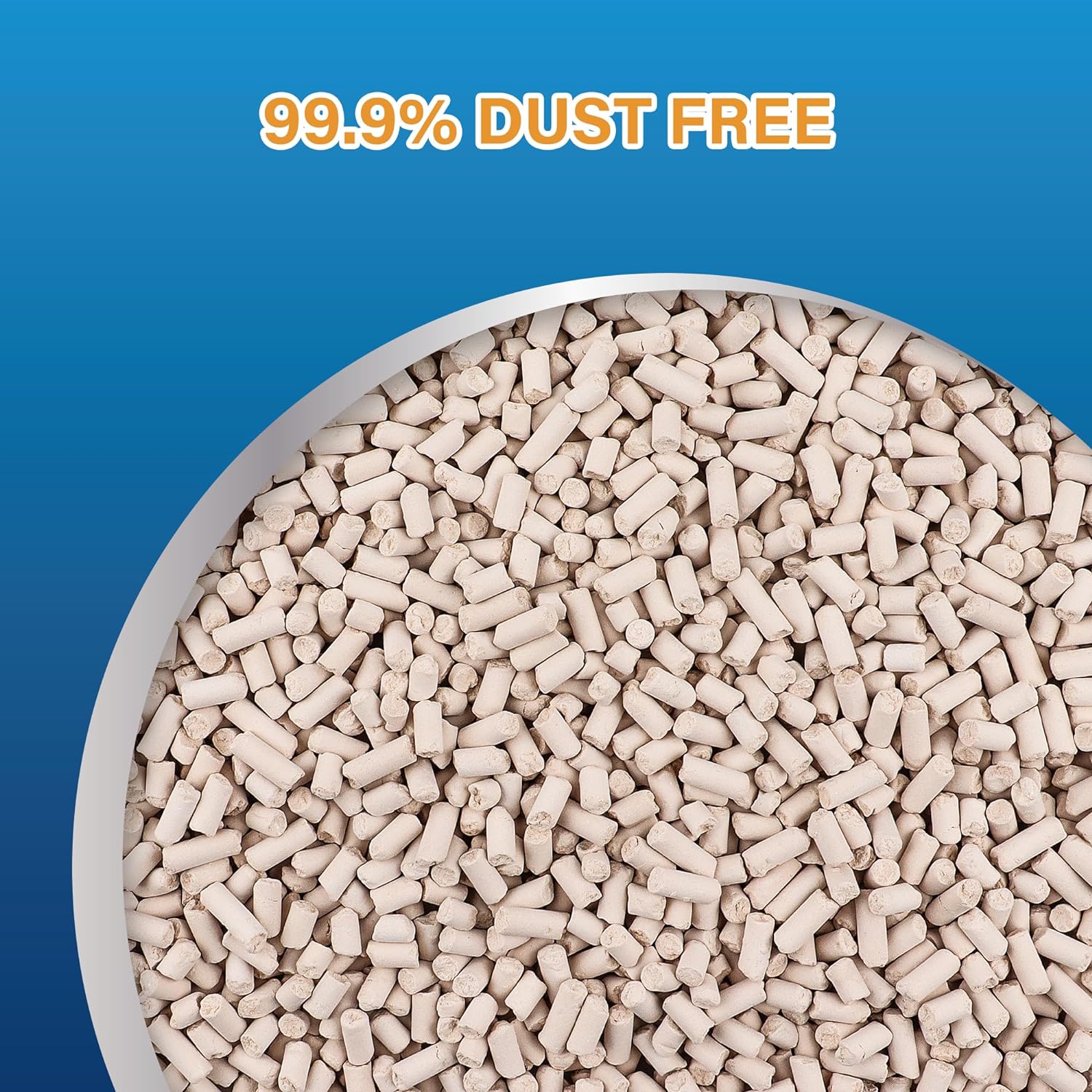
The most straightforward cost reduction in the Breeze system comes from replacing branded Breeze pellets with compatible third-party zeolite pellets. Multiple owner accounts confirm that Honey Care zeolite pellets are mechanically compatible with both the standard Breeze tray and the Breeze XL. The pellets are sized similarly, the zeolite mineral base performs the same liquid-separation function, and owners who have run both side by side report equivalent odor control performance. At 2026 pricing, Honey Care pellets run roughly thirty percent less per pound than Breeze-branded pellets.
The more interesting cost-reduction discovery — documented across long-run owner accounts — is a pellet-maintenance method that meaningfully extends replacement cycles. Owners describe lightly misting dried, solid-waste-free pellets with seventy-percent isopropyl alcohol twice weekly, then allowing full drying (twenty to thirty minutes) before cat access. The alcohol disrupts bacterial colonies on the pellet surface that contribute to secondary odor buildup beyond what the zeolite mineral alone handles. Owners using this method consistently report extending pellet replacement cycles from the standard twenty to thirty days out to approximately three months. The Spruce Pets’ editorial piece “Zeolite Odor Control in Cat Litter: How It Works” supports the underlying mechanism: bacterial breakdown of urine compounds is a primary driver of secondary odor, so disrupting bacterial colonization extends the zeolite’s effective working life.
Applied together — Honey Care pellets plus the alcohol-extension method — owners report annual pellet costs dropping below $50. That single change makes the total Breeze system cost competitive with standard clumping litter for a two-cat household.
Practical note: Apply the alcohol method only to dried pellets with solids already removed. Never spray while the cat is present or the pad is wet. Allow full air drying before the cat accesses the tray.
On the pad side, the budget approach runs standard Breeze pads and accepts the three-to-five-day replacement interval for two cats. Third-party generic alternatives — puppy training pads cut to fit — work mechanically but are not zeolite-based. According to iHeartCats’ editorial guide titled “Best Cat Litter for Odor Control: A Complete Guide,” activated carbon and zeolite both significantly outperform cellulose-based absorbents for ammonia lockdown — which explains why generic pad substitutes produce noticeably weaker odor performance past the twenty-four-hour mark. For owners prioritizing cost above all else, generic pads are an option. For everyone else, branded pads are worth the difference.
Honey
$27.99
In stock on Amazon
Check price on AmazonMid-Range Approach: Extra Strength Pads Combined with Third-Party Pellets
The mid-range cost strategy combines the third-party pellet savings described above with an upgrade to Breeze Extra Strength pads rather than standard pads. This combination sounds counterintuitive — spend more on pads to spend less overall — but the math works out.
Extra Strength pads use a heavier zeolite loading than standard pads. Owners who have run both formulations in two-to-three-cat households consistently report Extra Strength pads lasting forty to sixty percent longer than standard pads under equivalent use. In a two-cat household, that shifts the replacement interval from every three to five days (standard) to every five to seven days (Extra Strength). That difference reduces your annual pad count by roughly thirty percent, which offsets the per-pack price premium.
Combined with Honey Care pellets and the alcohol-extension method on the pellet side, this approach brings the total annual consumable cost for a two-cat Breeze household into the $110–$140 range — meaningfully below the $180–$250 baseline and competitive with premium clumping litter systems.
For single-cat households, the Extra Strength upgrade is less clearly worth it. Standard pads at a single-cat replacement interval (seven to ten days) are already cost-efficient, and the performance difference is less pronounced at lower urine volume loads.
Purina
$29.97
In stock on Amazon
Check price on AmazonPremium Approach: Parallel Systems for Three-or-More-Cat Households
At three or more cats, the Breeze system running as a standalone solution becomes the most expensive litter setup in the house. Pad changes at every-two-days frequency push annual consumable costs well above $300 even with third-party pellets. At that load, a different architectural approach is worth modeling.
The parallel-system strategy runs a self-cleaning automated unit as the primary solid-waste handler for the household — The Spruce Pets’ editorial feature “Best Self-Cleaning Litter Boxes of 2025” most frequently references the Litter-Robot 4 and PETKIT PURA X in this context — while the Breeze tray operates as a secondary unit specifically for cats who prefer a non-electric, low-noise option, or for a medically compromised cat where the liquid-separation and ammonia-control benefit is the primary concern.
This division of labor reduces the per-day load on the Breeze tray meaningfully. If the self-cleaning unit is handling a significant share of solid-waste deposits, the Breeze pads are absorbing urine load but not the full combined odor burden. Owners running this configuration in three-cat households report pad intervals stretching back out to every three to four days — closer to the two-cat baseline — because the system is no longer handling all three cats’ full elimination volume.
Apartment Therapy’s editorial feature “The Best Litter Boxes That Don’t Look Like Litter Boxes” notes that the Breeze tray’s compact footprint makes it straightforward to position unobtrusively alongside a larger automated unit, which addresses the space concern that makes some owners hesitant about running dual systems in smaller apartments.
The upfront hardware cost of adding a self-cleaning unit is significant. But modeled over a two-year period against the consumable savings from reduced Breeze pad frequency, the math often favors the parallel approach for households at three cats or more.
Purina
$84.68
In stock on Amazon
Check price on AmazonBreeze and Automated Self-Cleaning Units: The Compatibility Boundary
Owners sometimes ask whether the Breeze tray can be integrated with or replaced by an automatic self-cleaning box. The direct answer is no. The Breeze tray is a manual system, and the zeolite pellet substrate is mechanically incompatible with the raking, rotating, or sifting mechanisms used by self-cleaning units. Automated rakes and globe drums are engineered for granular clumping litter that compacts under pressure. Breeze pellets are rigid, cylindrical, and non-clumping — they would jam rake mechanisms and would not sift correctly through drum perforations designed for fine granules.
What the systems can do is operate in parallel, as described in the premium approach above. They are complementary tools for different parts of the elimination management problem, not interchangeable substitutes.
Frequently Asked Questions
How often do I really need to change Breeze pads with two or three cats? With two cats: every three to five days on standard pads, five to seven days on Extra Strength. With three cats: every two days is the consistent owner-reported reality regardless of pad type. Budget accordingly — the marketing copy implies longer intervals than multi-cat owners actually experience.
Are third-party zeolite pellets truly compatible with the Breeze XL tray? Yes, based on consistent owner reports across long-run use accounts. Pellet dimensions are compatible with the XL tray, the zeolite mineral base performs equivalently to Breeze-branded pellets, and the thirty-percent cost reduction is real and sustained.
What is the honest annual cost of the Breeze system for a two-cat household? With branded consumables: approximately $180–$250. With Honey Care pellets, the alcohol-extension method, and Extra Strength pads: approximately $110–$140. The gap closes significantly with deliberate consumable management.
Is the Breeze system suitable for a cat with kidney disease or elevated urine output? Yes, and this is one of its strongest use cases. PetMD’s editorial piece “Kidney Disease in Cats: Symptoms, Causes, and Treatment” identifies high urine output and ammonia accumulation as significant quality-of-life concerns for affected cats. The liquid-separation design keeps ammonia contained in the pad rather than off-gassing continuously, and pad saturation provides a rough visual proxy for urine volume — a useful early signal worth flagging to your veterinarian if you notice changes.
Does the Extra Strength pad formula actually last longer in multi-cat homes? Yes. Extra Strength refers to the pads, not the pellets — the distinction matters. Extra Strength pads use heavier zeolite loading and owners consistently report them lasting forty to sixty percent longer than standard pads in two-to-three-cat households. The price premium is justified in multi-cat settings; less clearly so for single-cat households where standard pads already run at efficient intervals.
The Decision Rule
One cat, straightforward odor problem: Breeze with Honey Care pellets and the alcohol-extension method closes most of the cost gap versus clumping litter. The operational upside — no dust, no wet disposal, no odor spikes — is real.
Two cats: run Extra Strength pads and Honey Care pellets. The math works, the odor control is meaningfully better than the standard configuration, and building pad changes into a twice-weekly habit removes the guesswork.
Three or more cats: the Breeze system is worth running if odor control or medical monitoring is your primary concern, but model the parallel-system approach before committing. A self-cleaning unit handling solid waste alongside a Breeze tray managing liquid-odor separation may cost less over two years than running Breeze at full three-cat load on consumables alone.
Skip the Breeze entirely if health-data monitoring, weight tracking, or vet-usable visit logs are your priority. The system has no sensor layer. For that use case, a PETKIT PURA X or Litter-Robot 4 with app integration is doing something categorically different — and the Breeze’s strengths don’t overlap with that need.