July 13, 2026 • Margot Vellacourt • 10 min reading time • Prices verified June 4, 2026
Globe vs. Open-Top Self-Cleaning Boxes: A Multi-Cat Household Verdict
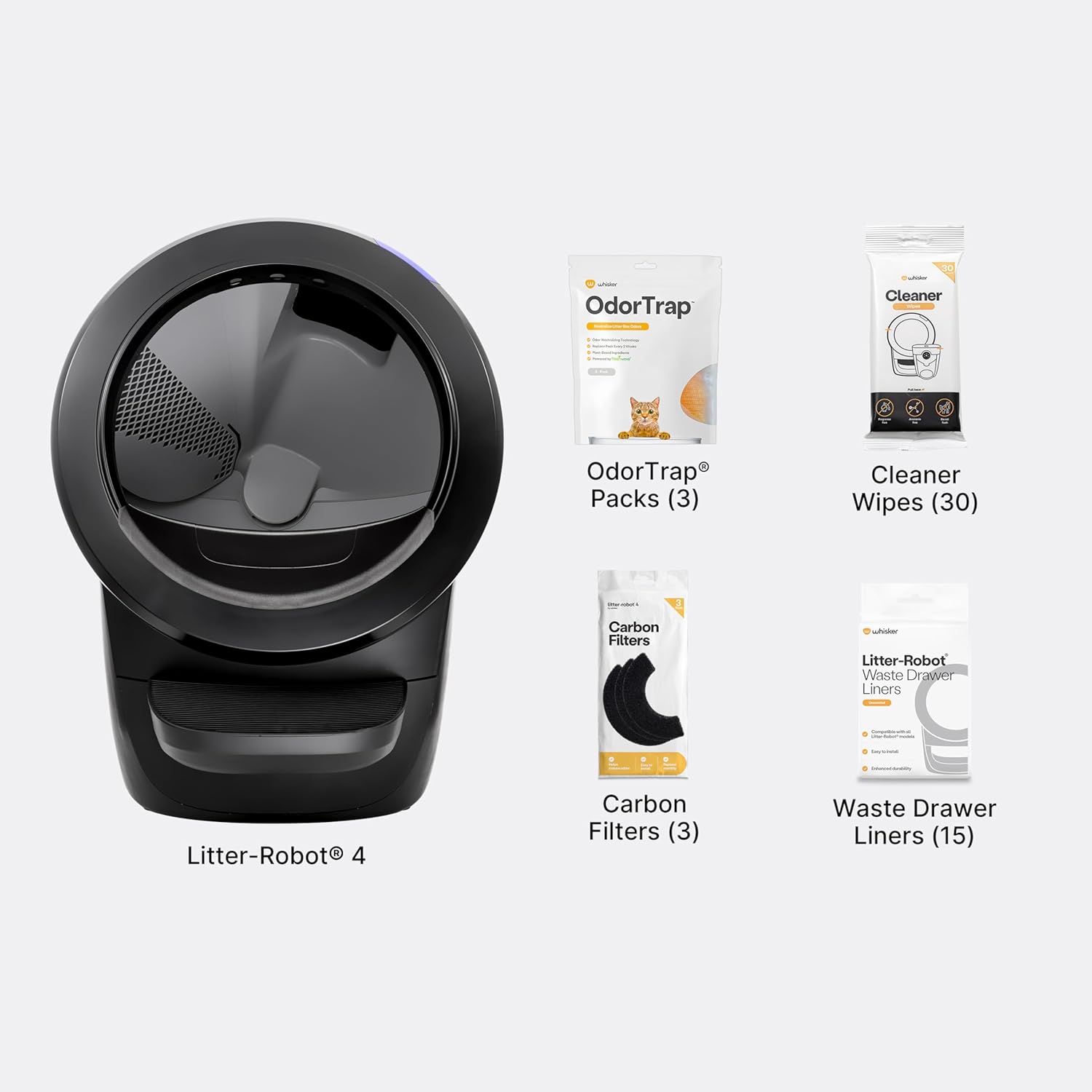
If you’ve ever Googled “best automatic litter box,” you already know the market splits into two very different shapes: the globe (a rotating ball or drum — think the Litter-Robot’s iconic silhouette) and the open-top (a rectangular tray with a motorized rake that sweeps clumps into a waste bin, the way a regular litter box would work if it cleaned itself). Both styles sense when your cat leaves, wait a few minutes, then run a cleaning cycle automatically. That’s where the similarities end. For a household with two, three, or four cats, the differences in odor control, cat acceptance, cleaning labor, and long-term cost are significant enough to make one format genuinely wrong for your situation. This article gives you the comparison framework you need to pick — including the honest case for budget open-top units that reviewers keep quietly preferring over premium globes.
The Globe Format: What You’re Actually Buying
The globe’s core value proposition is sealed odor control. After the drum rotates and waste falls into the bottom drawer, that drawer is either bagged or at minimum enclosed. Litter-Robot 4 owners consistently note that their households smell like nothing — and several reviewers specifically credit the sealed waste bag system rather than any carbon filter. The Spruce Pets’ “Best Self-Cleaning Litter Boxes” buyer’s guide captures this exactly: the LR4’s sealed drawer is treated as its defining feature, not the app or the weight sensors.
The tradeoff you accept for that odor performance is a combination of price, footprint, and cat politics.
Price. The Litter-Robot 4 retails at $699. The Litter-Robot 3 Connect runs $499. Even the PETKIT Purobot Max Pro 2 — a globe competitor that has earned strong multi-cat reviews — sits well above entry-level pricing. You’re not buying a robot; you’re buying a category.
Footprint. A globe unit occupies roughly the same floor space as a large dog crate. In studio apartments or tightly arranged litter corners, that’s a real constraint. The Litter-Robot 4’s matte sculptural finish helps it read as furniture, but it doesn’t shrink.
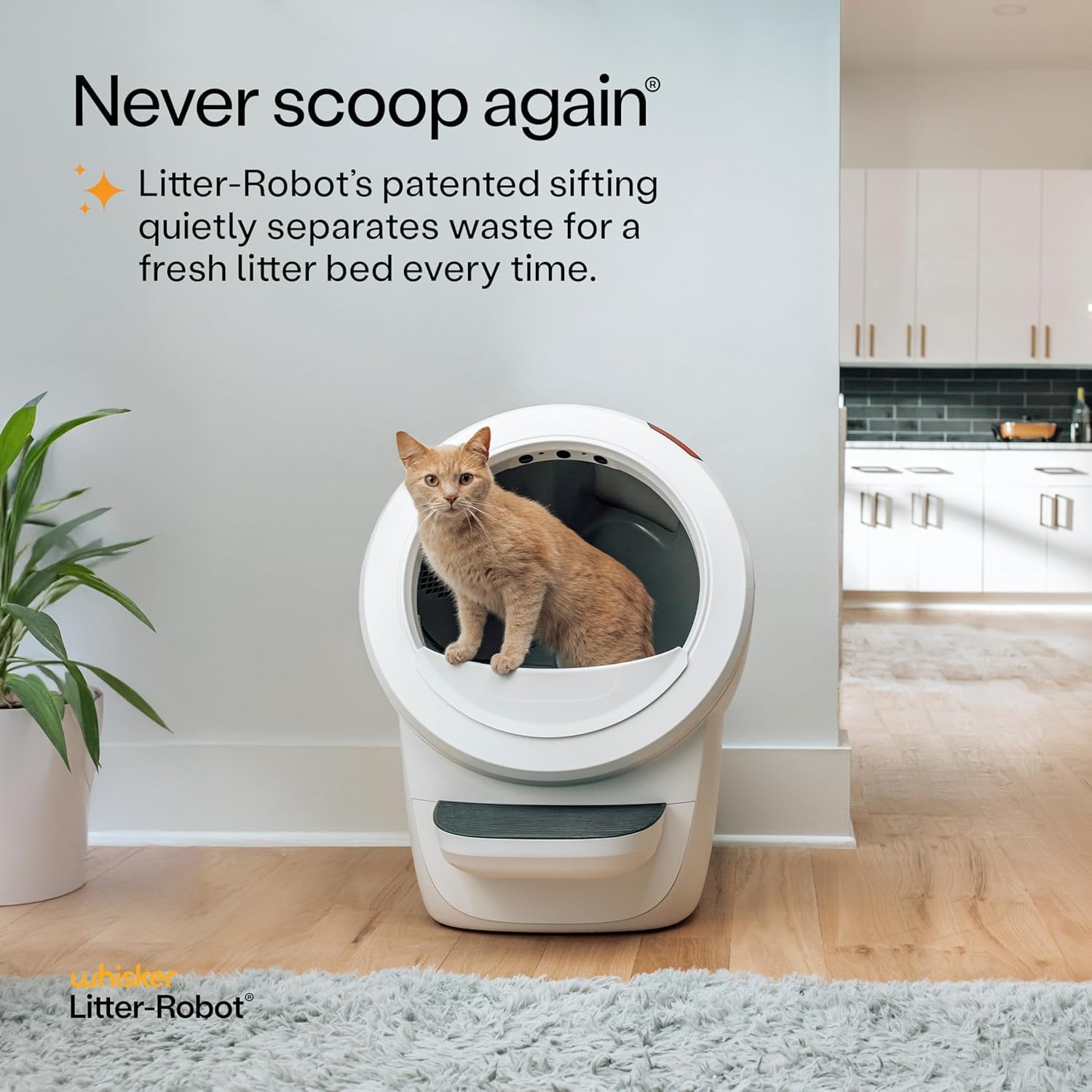
Cat politics. This is where the math gets messy. Companion Animal Psychology’s “Are Cats Stressed by Change?” behavioral overview documents that cats vary enormously in how quickly they accept novel enclosed spaces — and a globe is emphatically enclosed. Documented review patterns show Litter-Robot rejections, sometimes partial (one of four cats refuses), sometimes total. One widely-cited case: all four cats in a household rejected a Litter-Robot but adopted the PETKIT Purobot Max Pro 2 within days. Format aversion is real, not rare.
The Open-Top Format: What the Review Patterns Actually Show
Open-top automatic boxes — units like the Fumoi, Hazrela, Greesum, and Cumrige — work on a simpler mechanical principle: a motor-driven rake or sifter moves through the litter bed and deposits clumps in a collection bin on one end. The litter remains exposed to air between cycles.
Transition resistance is nearly zero. Across aggregated reviews of every open-top unit named above, the dominant pattern is immediate adoption — cats use them the same day, and in multi-cat homes, reviewers frequently report cats competing to use the box. PetMD’s “Litter Box Problems in Cats” veterinary guide notes that cats generally prefer litter areas that resemble their existing habits; an open-top box looks and smells familiar from a cat’s-eye view.
Odor control is the genuine weak point. Because the litter bed is open between cycles, open-top boxes rely more heavily on clumping speed, carbon filters, and cycle frequency than on physical containment. If you have three or more cats in a small apartment, this matters. A well-maintained open-top box with fresh litter and a functioning carbon filter is tolerable; a neglected one is not.
Cleaning and maintenance are easier. A Neakasa M1 Plus owner who also owns both the Litter-Robot 3 and Litter-Robot 4 explicitly states the Neakasa is “so much easier to clean” — and that assessment tracks across open-top reviews generally. Simpler mechanical components mean fewer seams to scrub, fewer gaskets to check, and no globe shell to disassemble.
The PetSafe SmartSpin is a cautionary note for this format. It draws consistent complaints about a sticky rubber litter base that traps waste and app connectivity failures within three months. Not all open-top units are created equal; rake mechanism quality and the base material choice matter as much as the motor.
Format Comparison by Household Type
The table below summarizes how globe and open-top boxes compare across three budget tiers. Following the table, each tier is broken down in its own section with a verdict marker.
| Globe (Litter-Robot 4) | Open-Top Mid-Tier (e.g. Neakasa M1 Plus) | Budget Open-Top (e.g. Cumrige) | |
|---|---|---|---|
| Entry cost | $699 | ~$200–$350 | ~$60–$120 |
| Typical consumables/year | Waste drawer bags + carbon filters (~$80–$120) | Carbon filters + bags (~$40–$70) | Replacement filters (~$20–$40) |
| Cat acceptance risk | Moderate–High (globe aversion documented) | Low (open format familiar) | Low |
| Odor containment | Excellent (sealed drawer) | Moderate (litter-dependent) | Moderate–Poor |
| Deep clean labor | High (globe shell, drum) | Low–Moderate | Low |
Budget Open-Top Units: The Sub-$120 Case
The comparison that cuts hardest against the premium narrative is this: one Cumrige owner who previously owned a Litter-Robot called the Cumrige “the better buy by a mile.” That deserves unpacking rather than dismissal.
The Cumrige, Greesum, and similar sub-$120 open-top units do a credible job at the core task — automated clump removal between visits — for a fraction of the flagship price. Catvills’ “Best Automatic Litter Boxes for Multiple Cats” editorial review notes that cycle timing and litter quality often matter more than box format for controlling day-to-day odor in lower-traffic households.
The honest limitations for larger multi-cat homes: budget rakes are typically rated for one to two cats, meaning cycle frequency can’t keep up with waste volume in a three- or four-cat household. Entry-level weight sensors and motion detectors also miss cats, trigger falsely, or stop functioning within months — the PetSafe SmartSpin’s connectivity failures are a preview of what corner-cutting looks like at the component level. For a first-time buyer testing the concept, however, a sub-$120 unit answers the real question — “will my cats actually use an automatic box?” — without committing $500–$700 to a format you haven’t validated. Apartment Therapy’s “We Tried 8 Self-Cleaning Litter Boxes” review roundup consistently notes that cat personality is the most underweighted variable in litter box purchasing decisions.

Automatic
$139.99
In stock on Amazon
Check price on AmazonMid-Tier Open-Top Units: The $200–$350 Sweet Spot
Mid-tier open-top units like the Neakasa M1 Plus occupy a genuinely useful position: they handle the mechanical load of a two- to three-cat household without the adoption gamble of a globe and without the reliability ceiling of budget components. The Neakasa M1 Plus’s cleaning ease advantage over globe-style units — documented by a multi-unit owner who runs both formats — compounds meaningfully over a one- to five-year ownership horizon.
The tradeoff versus a globe remains odor containment. In a larger home where odor diffuses across space, a mid-tier open-top unit with fresh litter and an active carbon filter subscription is a reasonable daily-use experience. In a studio apartment with three cats, it is not. For households in that latter category, a globe’s sealed drawer is the differential that justifies the premium — if the cats will use it.
Litter-Robot
$699.00
In stock on Amazon
Check price on AmazonPremium Globe Units: The $499–$699 Case
The Litter-Robot 4 and PETKIT Purobot Max Pro 2 represent the ceiling of what automatic litter box hardware currently does. Sealed waste containment, per-visit weight tracking, app-based health alerts, and multi-cat usage logs are features no open-top unit at any price replicates. PetMD’s “Litter Box Problems in Cats” veterinary guide explicitly connects monitoring visit frequency and output to early disease detection in cats — making the Litter-Robot 4’s health dashboard a genuine clinical tool for households managing a senior cat’s kidney disease or a cat prone to urinary blockages, not just a convenience feature.
The adoption risk is real and documented. Companion Animal Psychology’s “Are Cats Stressed by Change?” behavioral overview confirms that enclosed novel spaces are a genuine stressor for a subset of cats. Buyers with cats that have ever rejected covered boxes, carriers, or enclosed sleeping spaces should weight that risk heavily before committing. The iHeartCats “How Many Litter Boxes Do You Really Need?” ownership guide recommends one box per cat plus one extra as a baseline — meaning a four-cat household ideally runs five boxes. At Litter-Robot 4 pricing, that math is not practical; most globe-household owners run one or two units and accept that they fall short of the per-cat ideal on total box count.
Litter-Robot
$749.00
In stock on Amazon
Check price on AmazonWhich Format Is Right for Your Household
This is a decision rule, not a single verdict, because the right answer is genuinely household-specific.
Choose a premium globe if your cats already use hooded litter boxes or enclosed cat caves without hesitation, if you live in an apartment under 800 square feet with three or more cats, or if you’re managing a cat with a health condition where visit-frequency monitoring has clinical value. The Litter-Robot 4 gives you the best odor containment on the market and health data your vet can actually use.
Choose a mid-tier open-top unit if you have a larger home, cats with established routines in open boxes, or one or more cats that have previously rejected enclosed spaces. The Neakasa M1 Plus covers the core automation need without the adoption gamble. Spend the budget differential on higher-quality litter and a carbon filter subscription.
Start with a budget open-top unit if you’re testing the concept for the first time or running a one- to two-cat household in a medium-to-large space. Use the 30-day return window to validate that your specific cats adopt the format before upgrading.
Frequently Asked Questions
Do cats really resist globe-style boxes more than open-top designs?
Yes, meaningfully so — and it’s not rare. Documented review patterns show everything from temporary hesitation to outright rejection in multi-cat households. Companion Animal Psychology’s “Are Cats Stressed by Change?” behavioral overview confirms that enclosed novel spaces are a genuine stressor for a subset of cats. Open-top boxes read as familiar because they resemble conventional litter trays.
Is odor control significantly better in an enclosed globe box?
For true odor elimination, yes — particularly in the Litter-Robot 4, where waste is sealed in a bagged drawer and not exposed to air. Open-top boxes rely on litter quality, carbon filters, and cycle frequency to manage odor, which works adequately in larger spaces but is noticeably less effective in small apartments.
Can large cats (14–16 lbs) comfortably use open-top automatic boxes?
Comfort is not the limiting factor — clearance is. Most open-top boxes are fully unobstructed above, so a large cat can position itself freely. The real concern for large cats is the entry portal diameter on globe-style boxes. Litter-Robot’s globe is manufacturer-rated for cats up to approximately 20 lbs, but cats at the upper end of that range report tighter entry than the marketing implies. Open-top format removes this concern entirely.
Which format is easier to deep-clean and maintain?
Open-top units are consistently easier to deep-clean. Fewer enclosed surfaces, simpler rake mechanisms, and no globe shell to disassemble mean a full cleaning typically takes half the time of a globe-style unit. For busy multi-cat households where deep cleaning happens weekly, this labor difference compounds significantly over a year.
Are budget open-top boxes a real alternative to the Litter-Robot 4 for multi-cat homes?
For one- to two-cat households in medium-to-large spaces: yes, genuinely. For three- to four-cat households in apartments with odor sensitivity: no — not because open-top is a bad format, but because budget units lack the cycle capacity and sensor reliability for that usage volume. The honest middle ground is a mid-tier open-top unit at $200–$350 that handles the mechanical load without the premium globe price — accepting that you are trading some odor containment for lower adoption risk and simpler maintenance.