June 18, 2026 • Margot Vellacourt • 8 min reading time • Prices verified June 4, 2026
Pellet Litter Systems Beyond the Breeze: What Works and What It Costs Per Year
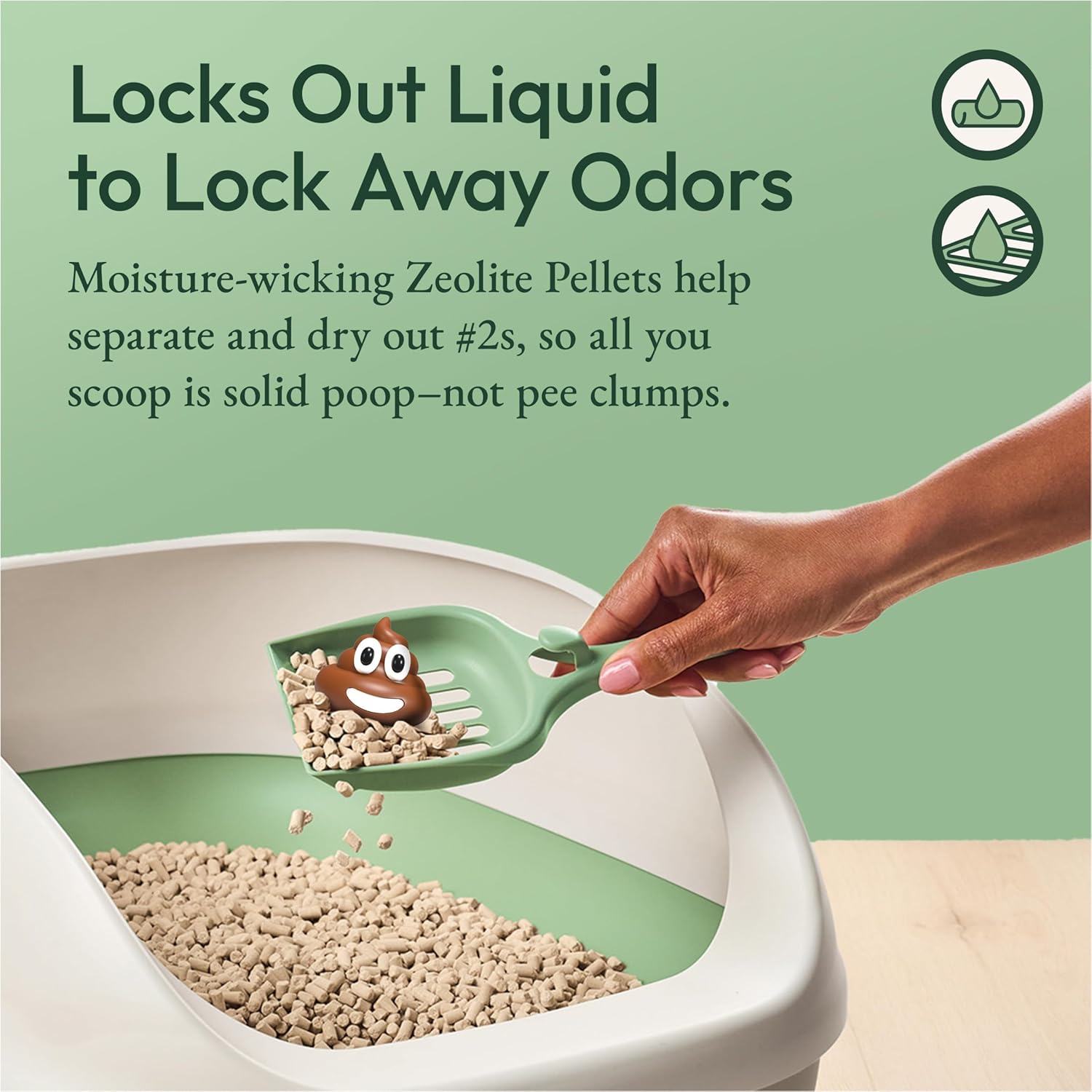
If you’ve ever watched a traditional clumping-litter box turn into a gray, tracked-up mess within 48 hours of cleaning, you’ve probably wondered whether there’s a smarter design. Pellet litter systems offer one answer. Instead of fine granules that stick to paws and scatter across your floor, these systems use larger pellets — think pencil-eraser-sized pieces, usually made from pine, silica, or plastic — sitting above a pull-out drawer lined with an absorbent pad. Liquid drops straight through the pellets and gets absorbed below; solids sit on top for easy scooping. The result is dramatically less tracking, a smaller footprint, and a more predictable weekly cost. The Tidy Cats Breeze is the name most people know, but it’s far from your only option — and depending on how many cats you have, it may not even be your best one. This guide breaks down how pellet systems stack up, what the serious alternatives cost over a year, and when a pellet design makes sense versus when you should keep scrolling.
| EDITOR'S PICKPurina Tidy Cats Breeze Cat Lit… | Mid-tierPurina Tidy Cats Breeze Litter… | Budget pickEnhanced Zeolite Cat Litter Pel… | |
|---|---|---|---|
| Weight (lb) | 8.18 | 7.91 | 7 |
| Pads included | — | — | 10 |
| Material | — | — | Zeolite |
| Price | $34.97 | $29.97 | $23.98 |
| See on Amazon → | See on Amazon → | See on Amazon → |
How Pellet Systems Actually Work (and Where They Fall Short)
The mechanics are straightforward: pellets are porous enough to let urine pass through but rigid enough that cats don’t scatter them like sand. The liquid collects in the bottom tray, absorbed by a replaceable pad. Feces sit on the pellet surface and are scooped out manually — most systems still require daily or every-other-day solid removal.
This two-zone approach (liquid below, solid on top) is the core value proposition. Owners consistently report a significant reduction in litter tracking compared to clumping clay, and across aggregated reviews on The Spruce Pets, lower ambient odor is one of the most frequently cited advantages — particularly in apartments or smaller homes where a standard box sits near living areas.
The tradeoffs are real, though. Pellet systems require more cat cooperation. Cats accustomed to the digging sensation of clay may reject a pellet system outright — PetMD’s overview of litter preferences notes that texture aversion is one of the leading causes of litter box avoidance, and a rigid pellet surface is a significant departure from what most cats have known their whole lives. If you have a multi-cat household with even one texture-sensitive cat, budget for a 30-day parallel-box transition period.
The other honest limitation: pellet systems don’t automate solid waste removal. If you’re reading this because you want a unit that cleans itself entirely, pellet-only designs aren’t that product. They reduce labor; they don’t eliminate it.
The Breeze Baseline — and Why It’s Not the Only Answer
The Tidy Cats Breeze system (roughly $35–$45 for the starter kit as of mid-2026) has been the default entry point for pellet litter for over a decade. It works. The proprietary pellets are well-designed, the pads are widely available at retail, and the box itself is durable enough that owners frequently report using the same physical unit for five or more years.
But the Breeze model has three structural constraints that push intermediate buyers toward alternatives:
1. Proprietary consumables at a fixed price. Tidy Cats sells Breeze pads in packs of four, and the pellets in sealed bags. You’re largely locked into their SKUs at their price points. Per published pricing on major retail platforms in May 2026, a single-cat household running the Breeze spends approximately $120–$150 per year on pads and pellets combined. Two cats pushes that to $180–$220. Modern Cat’s coverage of litter alternatives notes that the Breeze’s consumable lock-in is its most common long-term complaint.
2. Pad capacity by cat count. The standard Breeze tray uses one pad per week for a single cat. With two or more cats, most owners report needing pad changes every 3–4 days, which accelerates costs nonlinearly.
3. No app integration, no weight data, no health tracking. If you’re in this space because you want usage data on your cats, the Breeze is purely mechanical. That’s fine — but it’s a ceiling.
The Real Alternatives Worth Evaluating
PetSafe Simply Clean Litter System
At roughly $50–$70 for the unit, the PetSafe Simply Clean uses a slow-rotating conveyor that continuously moves waste into a receptacle — technically a hybrid between a pellet approach and a basic automated scooper. It’s not a pure pellet system, but it uses compatible low-dust litter and shares the low-tracking benefit. Owners in long-run reviews note that the motor is quiet enough for bedroom placement, though the slow-cycle mechanism means it’s better suited to one-cat households; two cats can overwhelm the conveyor between full cleanings. This is a reasonable $50 experiment if you’re not ready to commit to a $200+ unit.
Van Ness Easy-Clean Enclosed Litter Pan with Pellet-Compatible Design
Not a branded pellet system, but Van Ness’s deep-tray enclosed pans are frequently cited in Apartment Therapy’s small-space coverage as compatible with pine pellet litter — specifically the unscented, non-clumping variety. The pellets break down into sawdust when saturated and fall through a sifting layer. The pan itself costs under $20, and pine pellets run $10–$15 per 20-pound bag. For a single cat, this is a legitimate $60–$90/year operation. The catch: you’re doing all the management manually, and the system rewards owners who can commit to a 2x-weekly sifting schedule.
PETKIT PURA X with Non-Clumping Pellet Litter (Hybrid Use Case)
This is worth flagging because it comes up in multi-cat household discussions. The PETKIT PURA X ($199) is marketed as a self-cleaning automated globe, but several owners in aggregated reviews note they’ve run it successfully with smaller-pellet silica blends rather than traditional clumping clay. The app integration — weight monitoring, visit frequency, health trend alerts — makes it functionally different from any manual pellet system. If you’re already considering a PETKIT unit and the low-tracking benefit of pellets is a priority, the hybrid approach is worth researching further before committing to a dedicated pellet-only design.
Ökocat Non-Clumping Wood Pellet Litter (Breeze-Compatible)
This is a consumable substitution rather than a system replacement, but it’s an important one. Ökocat’s wood pellets are sized and designed to work in Breeze-style trays as a direct Breeze pellet replacement. Published pricing puts a 7.7-pound bag at around $12–$15 retail in mid-2026, which is modestly cheaper than Tidy Cats’ proprietary pellets per ounce and offers an unscented, low-chemical option. Owners with scent-sensitive cats consistently report this substitution as an improvement. This is the easiest cost-reduction move for current Breeze users without replacing hardware.
By the Numbers: Annual Pellet System Cost Comparison (Single Cat, 12 Months)
| System | Hardware Cost | Annual Consumables | Total Year 1 |
|---|---|---|---|
| Tidy Cats Breeze | $40 | $130–$150 | ~$175 |
| Pine pellet DIY (Van Ness tray) | $18 | $60–$80 | ~$90 |
| PETKIT PURA X (hybrid pellet use) | $199 | $120–$160* | ~$340 |
| PetSafe Simply Clean | $65 | $80–$100 | ~$155 |
*PETKIT consumables vary depending on litter type selected; estimate reflects silica/pellet blend usage pattern reported by owners in aggregated reviews.
Cat Acclimation: The Variable Nobody Prices In
All the cost math above assumes your cat uses the system. That assumption is worth stress-testing before you spend anything.
Companion Animal Psychology’s work on litter box preference research is consistent: cats prefer substrates that allow digging and covering behavior. Pellets don’t compress or clump, which means some cats — particularly those who were litter-trained on clay — treat a pellet box as foreign territory and simply stop using it. The 30-day return window on most retail purchases is your safety net here.
The most reliable acclimation strategy reported by owners across review aggregations: run the pellet system in parallel with the existing litter box for 2–4 weeks before removing the old box. Don’t rush the transition. If you have a particularly anxious cat or a cat with a history of litter box avoidance, consider flagging the change with your vet before committing — PetMD notes that litter box refusal is one of the most common stress-related behavior complaints in cats, and a texture change can be the trigger.
The Decision Framework: Which System for Which Situation
If you have one cat, an apartment, and tracking is your primary complaint: The pine pellet DIY setup (Van Ness tray + bulk wood pellets) is the lowest-risk, lowest-cost entry point. $90 for year one, fully manual, and you’ll know within 30 days whether your cat tolerates pellets. If she does, you’ve solved the tracking problem for under $100. If she doesn’t, you’re out $18 for the tray.
If you’re already a Breeze user looking to reduce costs: Swap Tidy Cats pellets for Ökocat wood pellets and keep your existing hardware. Likely saves $20–$40/year with no behavior disruption.
If you have two or more cats and want real tracking reduction plus health data: The PETKIT PURA X in hybrid configuration is the path worth evaluating. You’re spending more upfront, but the app-based visit and weight monitoring produces data your vet can actually engage with — visit frequency changes and weight fluctuation are early signals for urinary and metabolic issues. Modern Cat’s coverage of smart litter systems consistently highlights this as the differentiator between “nicer box” and “health tool.”
If you want maximum automation and tracking is secondary: Pellet-only systems aren’t your answer. The Litter-Robot 4 ($699) or Litter-Robot 3 Connect ($499) use clumping litter and handle solid waste removal automatically. Pellet designs trade automation for tracking control — you can’t fully optimize both with current hardware.
If your cat has rejected a pellet system before: Don’t try again without a structured parallel-box acclimation plan and a clear 14-day checkpoint. A second rejection is more entrenched than the first. If two attempts fail, take it as signal and move on to a low-dust clumping system instead.
The Breeze is good. But it’s the baseline, not the ceiling — and depending on your cats, your budget, and what you actually need the system to do, there are cheaper paths, smarter paths, and more honest non-paths worth knowing before you buy.