July 14, 2026 • Margot Vellacourt • 11 min reading time • Prices verified June 4, 2026
The Mid-Range Showdown: PETKIT PuraMax 2 vs. Open-Top Competitors Under $300

If you’ve ever scooped a litter box at 6 a.m. in the dark, you already understand the appeal of a self-cleaning model — a motorized unit that senses when your cat has left, waits a few minutes for odors to settle, then automatically rotates or rakes the clumped waste into a sealed compartment so you don’t have to. The $200–$300 tier is where the category gets genuinely interesting: smart-app integration, weight tracking, and waste cameras are no longer reserved for flagship $600 machines. But “interesting” also means “complicated,” because this tier mixes breakout new entries, rebranded designs, and some units that look great in unboxing videos but don’t survive a second winter.
This article is a structured comparison of four units currently competing in that sub-$300 window: the PETKIT PuraMax 2, the Purobot Max Pro 2, the Neakasa M1 Plus, and the Petcove PurrTek. If you’ve already decided the $400–$700 bracket is too rich for your blood right now, or you’re managing three or four cats and want maximum throughput per dollar, this is your decision framework. We’ll name the tradeoffs, show the math on true cost of ownership, and end with an explicit “if X, then Y” guide.
| EDITOR'S PICKPETKIT Purobot Max Pro 2 AI-Cam… | Mid-tierNeakasa M1 Plus Open-Top Self-C… | Budget pickUPFAS Automatic Cat Litter Box… | |
|---|---|---|---|
| Opening type | Extra Large | Open-Top | — |
| WiFi/app | ✓ | — | ✓ |
| Weight monitor | — | — | ✓ |
| Safety sensors | — | 360° | Anti-Pinch |
| Refill bags | — | 2 Rolls | — |
| Litter mat | — | ✓ | — |
| Price | $465.99 | $449.99 | $127.49 |
| See on Amazon → | See on Amazon → | See on Amazon → |
How These Four Actually Differ (Beyond the Spec Sheet)
At first glance, all four units share the same basic pitch: globe or drum that rotates, clumps drop into a drawer, an app on your phone tracks visits. The divergence happens in three areas that matter most in daily use — cycle throughput, health-data quality, and what happens when something breaks.
PETKIT PuraMax 2: Most Feature-Dense in the Tier
The headline addition over the original PuraMax is the integrated waste-analysis camera and the upgraded SmartScale weight sensor. Verified purchasers on Amazon consistently praise the weight tracking feature, with at least one owner updating their original review specifically to call weight monitoring a “bonus discovery” — they hadn’t expected to care about it and then found themselves checking it weekly. That kind of retroactive enthusiasm is a reliable signal that a feature delivers real value rather than just marketing copy. The PETKIT app setup is also repeatedly described as quick and low-friction compared to competitors.
Downside: PETKIT’s consumables model means you’re buying their branded deodorizing sticks and, depending on litter choice, keeping within their recommended granule weight range to maintain sensor accuracy. Wirecutter, in their periodically updated guide “The Best Automatic Litter Box,” notes that proprietary consumable costs are consistently underweighted by buyers at point of purchase — a dynamic that plays out clearly here.
Neakasa
$449.99
In stock on Amazon
Check price on AmazonPurobot Max Pro 2: Best for Anxious or Skittish Cats
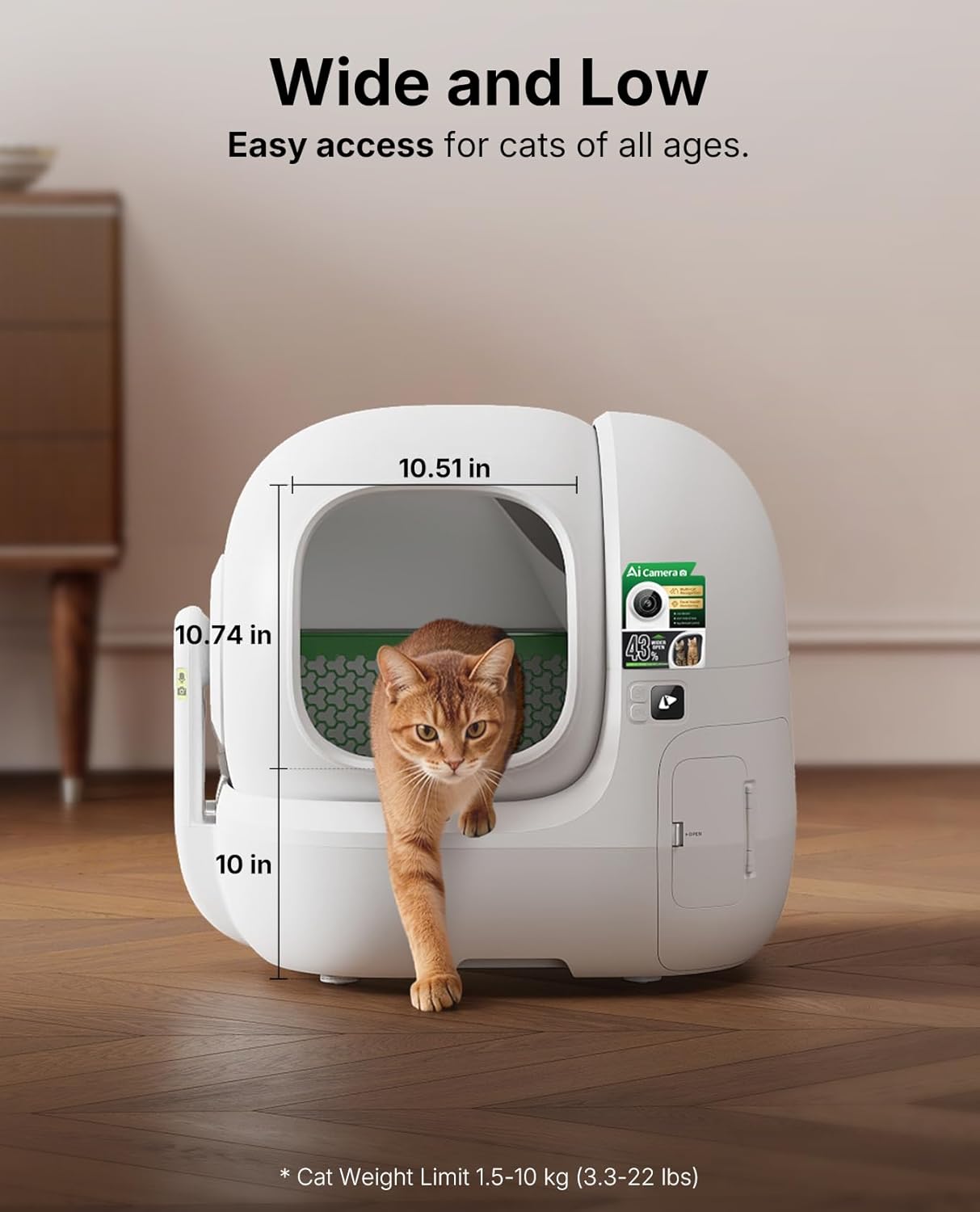
This unit will genuinely surprise you if you’ve been burned by cat acclimation problems before. A verified four-cat household reviewer on Amazon reports that all four cats adopted the Purobot Max Pro 2 immediately — a striking contrast because the same reviewer had a Litter-Robot 4 that none of their cats would enter. That’s one data point, but it aligns with a documented pattern: open-top or low-hood designs tend to reduce the anxiety that makes globe-style boxes a hard sell for skittish or senior cats.
The tradeoff is real. A separate four-star verified reviewer explicitly flags that the interior is cramped for larger cats (over roughly 14 lbs), and the cycle speed is slow enough that cats queue up in multi-cat homes during busy morning and evening windows. For a three-cat household where one cat is a Maine Coon, that cycle bottleneck is a legitimate daily annoyance. The Purobot Max Pro 2’s health logging is also less robust than the PuraMax 2’s — it tracks visits and duration but lacks granular per-visit weight logging, which is a meaningful gap in multi-cat homes where you want to know which cat is losing weight.

UPFAS
$127.49
In stock on Amazon
Check price on AmazonNeakasa M1 Plus: Easiest to Clean, but Durability Questions Linger
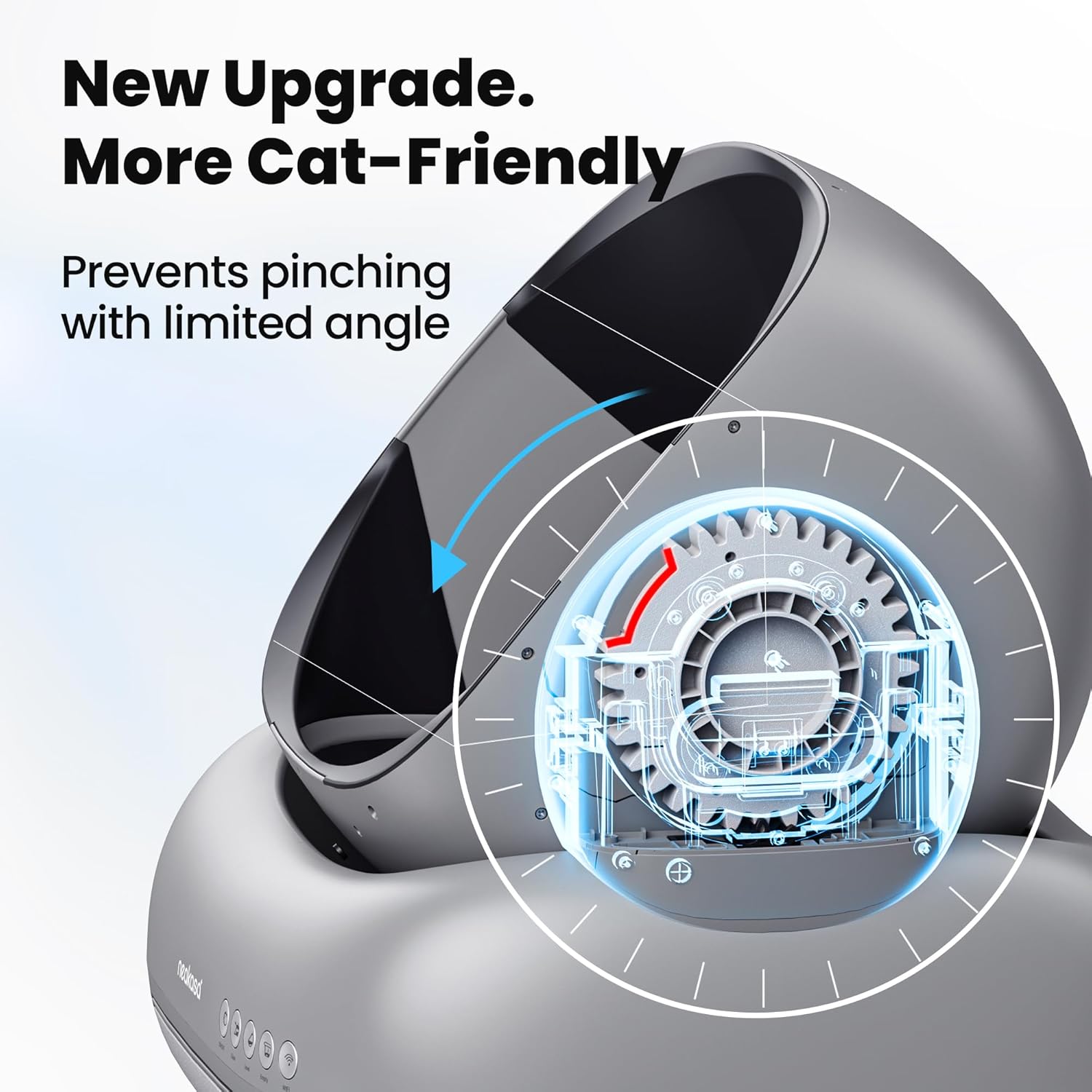
The Neakasa plays a different card entirely: it is conspicuously easy to disassemble and clean. A verified purchaser who also owns both the Litter-Robot 3 Connect and the Litter-Robot 4 states flatly in their Amazon review that the Neakasa M1 Plus is “hands down the best” of any unit they’ve owned for ease of cleaning and maintenance. That’s a bold claim and it deserves scrutiny. The Litter-Robot 4 has a legitimate maintenance reputation problem — its globe liner is fiddly, the drawer sensors are finicky, and deep-cleaning the interior requires more steps than Whisker’s documentation suggests. If the Neakasa genuinely beats it on maintenance accessibility, that’s a real differentiator.
However: the same product has a verified one-star review describing catastrophic mechanical failure at six months. The unit originally retailed around $500 and has since dropped to approximately $380, which itself tells a story about market positioning pressure. The Spruce Pets’ 2026 roundup “Best Automatic Litter Boxes” marks maintenance accessibility as an increasingly weighted factor for multi-cat households — and on that metric the Neakasa earns its praise. But easier to clean is not the same as more durable, and those two things have to be weighed together.
Neakasa
$449.99
In stock on Amazon
Check price on AmazonPetcove PurrTek: Best for Cats with Chronic Health Conditions
The PurrTek is the outlier in how it earns its price. Multiple verified purchasers cite the lifetime warranty as their primary reason for purchasing, and at least one four-star reviewer used the weight monitoring feature to track fluid intake changes in a diabetic cat — a genuinely clinical use case. iHeartCats, in their guide “Signs Your Cat May Be Losing Weight,” notes that subtle weight change in a cat with a known metabolic condition can indicate fluid intake shifts, exactly what that reviewer was tracking. When a warranty drives purchase intent more than the feature set does, it means buyers are pricing in the risk of failure and paying for the safety net.
That’s rational. But it also means the PurrTek’s feature story is less differentiated than the PuraMax 2’s, and you need to read the warranty terms carefully before treating “lifetime” as a blank check. Based on Petcove’s published warranty documentation, coverage applies to mechanical defects in normal use and excludes consumable parts, physical damage, and failures attributed to incompatible litter.
PETKIT
$465.99
In stock on Amazon
Check price on AmazonThe Real Cost of Ownership: By the Numbers
Sticker price is the beginning of a four-year relationship, not the whole story. Wirecutter’s ongoing automatic litter box coverage specifically flags that long-term consumable costs are frequently underweighted at the point of purchase, and that pattern holds across all four units here.
| Unit | Approx. Street Price (May 2026) | Est. Annual Consumables | 2-Year All-In |
|---|---|---|---|
| PETKIT PuraMax 2 | ~$199 | ~$80–$120 (proprietary deodorizer sticks, filters) | ~$359–$439 |
| Purobot Max Pro 2 | ~$229 | ~$60–$90 (generic carbon filters) | ~$349–$409 |
| Neakasa M1 Plus | ~$380 | ~$50–$70 (replacement liners, filters) | ~$480–$520 |
| Petcove PurrTek | ~$249 | ~$60–$80 (filters, liners) | ~$369–$409 |
The PETKIT consumables model skews higher because their deodorizer sticks are proprietary. The Neakasa’s higher base price doesn’t compress at the two-year mark the way you might hope. The Purobot Max Pro 2 comes out as the most economical two-year scenario if the consumables stay generic — but only if cycle throughput is sufficient for your household size.
App Health Monitoring: What the Data Actually Does for Your Cat
This is where marketing tends to get ahead of reality, and where honest calibration matters.
PetMD, in their guide “How to Monitor Your Cat’s Weight at Home,” emphasizes that trend matters more than any single measurement — a 0.5 lb drop over three weeks is more informative than a one-time number. The weight sensors across all four units here operate on that same principle: they log each visit and build a trend line over time. The PETKIT PuraMax 2’s SmartScale is consistently described by verified reviewers as accurate enough to detect meaningful fluctuations week over week. The owner who discovered weight monitoring as a “bonus” is a good example of the feature working as intended — the data surfaced something they hadn’t thought to look for.
The PurrTek’s weight monitoring serving a diabetic cat’s care represents a stronger clinical case. PetMD’s weight monitoring guidance and iHeartCats’ coverage of feline weight loss both emphasize that consistent trend data — exactly what a connected litter box provides passively — is the kind of information that makes a real difference for cats with chronic conditions like diabetes, kidney disease, or hyperthyroidism.
The Purobot Max Pro 2’s health logging, by contrast, tracks visits and duration but lacks per-visit weight logging. For a single cat, that gap is acceptable. For a multi-cat home where you want to know which specific cat is losing weight, it’s a meaningful limitation. The Neakasa M1 Plus’s health monitoring sits in the middle — present and functional, but not a differentiator reviewers mention unprompted.
The Spruce Pets’ 2026 automatic litter box roundup “Best Automatic Litter Boxes” consistently marks app-based weight monitoring as a standout feature for senior-cat households and cats with chronic conditions, noting it has shifted from premium differentiator to near-baseline expectation in the $200–$300 tier.
Frequently Asked Questions
Does the PETKIT waste analysis camera show useful health information or just photos? Based on verified reviewer accounts and PETKIT’s published feature documentation, the camera captures images of the waste compartment after each cycle. Reviewers describe it as useful for spotting visible consistency changes — diarrhea, blood, or unusually small deposits — but it does not perform automated diagnostic analysis. You are looking at photos, not reading a diagnostic report. The camera is a useful supplement to weight trend data, not a replacement for veterinary evaluation.
How accurate is weight monitoring across these mid-range units? PETKIT PuraMax 2 and Petcove PurrTek reviewers consistently report meaningful accuracy — sufficient to track trends week over week, which is the clinically relevant use case per PetMD’s guidance on feline weight monitoring. Exact gram-level precision varies, and neither unit should be treated as a veterinary scale. The Purobot Max Pro 2 does not offer comparable per-visit weight logging.
Can the Purobot Max Pro 2 handle three or more cats without cycle backups? Reviewers suggest it can handle three cats, with caveats. The cycle is slower than the PuraMax 2, and in households with peak-traffic morning windows, cats have been reported queuing. For three cats with staggered schedules, it is workable. For four cats with clustered post-feeding usage, the bottleneck is real and four-cat household reviewers flag it explicitly.
Is the Neakasa M1 Plus actually easier to clean than a Litter-Robot? The reviewer who owns both the LR3 Connect and the LR4 and names the Neakasa the best for cleaning is describing a real experience consistent with what the Neakasa’s design prioritizes — accessible disassembly and fewer interior crevices that trap litter. However, the product also has a catastrophic-failure review at six months. Easier to clean is not the same as more durable, and those two qualities require separate evaluation.
Which units work on 5GHz Wi-Fi versus 2.4GHz only? All four units in this comparison — the PETKIT PuraMax 2, Purobot Max Pro 2, Neakasa M1 Plus, and Petcove PurrTek — operate on 2.4GHz only. This is standard across virtually all smart litter boxes in this price tier. If your router broadcasts a combined 2.4/5GHz SSID, you may need to split it or connect explicitly via the 2.4GHz band during setup. Reviewers across all four units mention this as a common friction point.
If X, Then Y: The Decision Rule
-
If you have one to two cats and want the most health data per dollar, the PETKIT PuraMax 2 is the pick. The camera, weight tracking, and app polish justify the price for any household that will actually use the monitoring features.
-
If cat acclimation is your primary risk — you’ve had a failed transition to an automated box before, or your cats are anxious or senior — the Purobot Max Pro 2’s open-top design is worth the cycle-speed tradeoff. Do not pair it with a large-cat household or a four-cat peak-traffic scenario.
-
If easy maintenance is your non-negotiable and you’re prepared to accept some durability uncertainty, the Neakasa M1 Plus delivers on its cleaning reputation. Price it as a three-year purchase rather than a five-year one, and factor in that its market price has dropped significantly from its original launch — which suggests the market has already discounted some of that durability risk.
-
If you have a cat with a chronic health condition — diabetes, kidney disease, hyperthyroidism — and want weight monitoring as a genuine clinical tool plus the security of warranty coverage, the Petcove PurrTek’s combination of trend-based weight logging and lifetime mechanical warranty is the most defensible choice.
None of these units are landfill picks. All four represent a genuine step up from manual scooping and from the sub-$130 entry-level field. The tradeoffs are real, but they are the right kind of tradeoffs — the kind where the answer depends on your household, not on which unit has better product photography.