August 11, 2026 • Margot Vellacourt • 10 min reading time • Prices verified June 4, 2026
Crystal Litter Box Systems in 2025: ScoopFree Models Compared by Real Owners
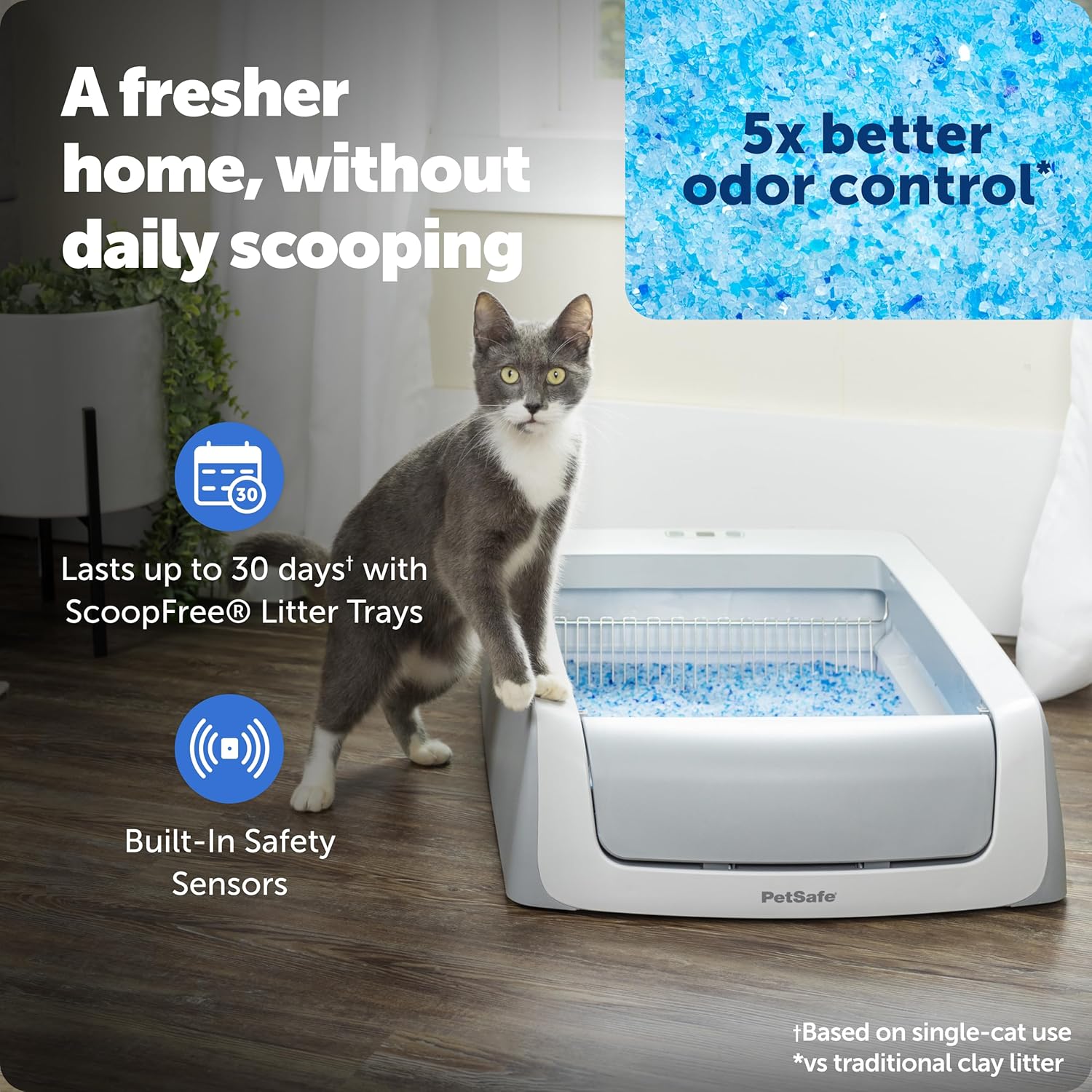
If you’ve never used a crystal litter box, here’s the quick version: instead of the clay or clumping litter most people grow up with, these systems use silica gel crystals — the same absorbent material inside those little “Do Not Eat” packets in shoeboxes, scaled way up. The crystals soak up urine and dry it out almost instantly, which dramatically cuts odor compared to a traditional box. Solid waste still needs to be scooped, but the liquid disappears into the crystals over days or weeks. PetSafe’s ScoopFree line is the dominant brand in this category, with four distinct models ranging from basic to app-connected. PrettyLitter, a subscription litter service, uses a similar silica formula but adds a color-change indicator that can flag potential health issues in your cat’s urine. This article breaks down which crystal system is actually worth owning long-term — and which ones real owners are returning after six months.
The ScoopFree Lineup: Four Models, Very Different Outcomes
The frustrating thing about shopping the ScoopFree line is that the name is nearly identical across all four products, but the actual ownership experience splits sharply depending on which one you buy. The Spruce Pets, in their 2025 editorial review “Best Self-Cleaning Litter Boxes,” identifies this naming confusion as one of the most common purchase mistakes in the automated litter box category. The tradeoffs below are worth naming directly before you hand over your credit card.
ScoopFree Original
The oldest model in the lineup, still sold, still using fully disposable plastic trays pre-loaded with crystals. You swap the whole tray every few weeks, toss it, and you’re done. Verified purchasers with three or more years of ownership consistently describe the hardware as reliable and essentially maintenance-free from a mechanical standpoint. One long-term owner’s summary: “worth every penny” with zero mechanical failures across the ownership period.
The tradeoff is obvious and permanent: you are generating significant plastic waste every single month. If you have one cat and a high tolerance for recurring disposal costs, the Original is genuinely dependable hardware. If you have two or more cats, tray life shrinks fast and the economics become difficult to justify.
PetSafe
$199.99
In stock on Amazon
Check price on AmazonScoopFree Crystal Pro
This model introduced a “Forever Tray” concept — a reusable plastic base lined with disposable plastic liners. The idea sounds better in theory than it performs in practice. Multiple verified reviewers describe the liner failing to contain urine properly, with liquid seeping under the liner and absorbing directly into the porous plastic of the tray. Once that happens, the tray becomes a permanent odor source. Swapping a fresh liner doesn’t fix it because the smell is bonded into the plastic itself. One 1-star reviewer describes their bathroom as “never looking or smelling so bad” after switching to this model.
The health counter feature — a usage tracker intended to help gauge when crystals are exhausted — is present on this model, but reviewers consistently report it isn’t granular enough to be actionable. It registers that a tray has been used; it doesn’t tell you whether the crystals are actually saturated.

PetSafe
$229.99
In stock on Amazon
Check price on AmazonScoopFree Crystal Smart
This model adds Wi-Fi connectivity and an app layer. The app tracks usage frequency, which is genuinely useful for multi-cat homes where you’re trying to understand which cat is visiting the box and how often. The problem, per long-run verified reviews aggregated through 2025, is crystal consumption rate. One six-month owner reports going through litter faster than with any previous system and ultimately describes the purchase as a regret. The usage-tracking appeal is real, but if the litter burn rate is high, you’re paying a recurring consumable cost that steadily erodes the value of the hardware investment.
PetSafe
$229.99
In stock on Amazon
Check price on AmazonScoopFree SmartSpin
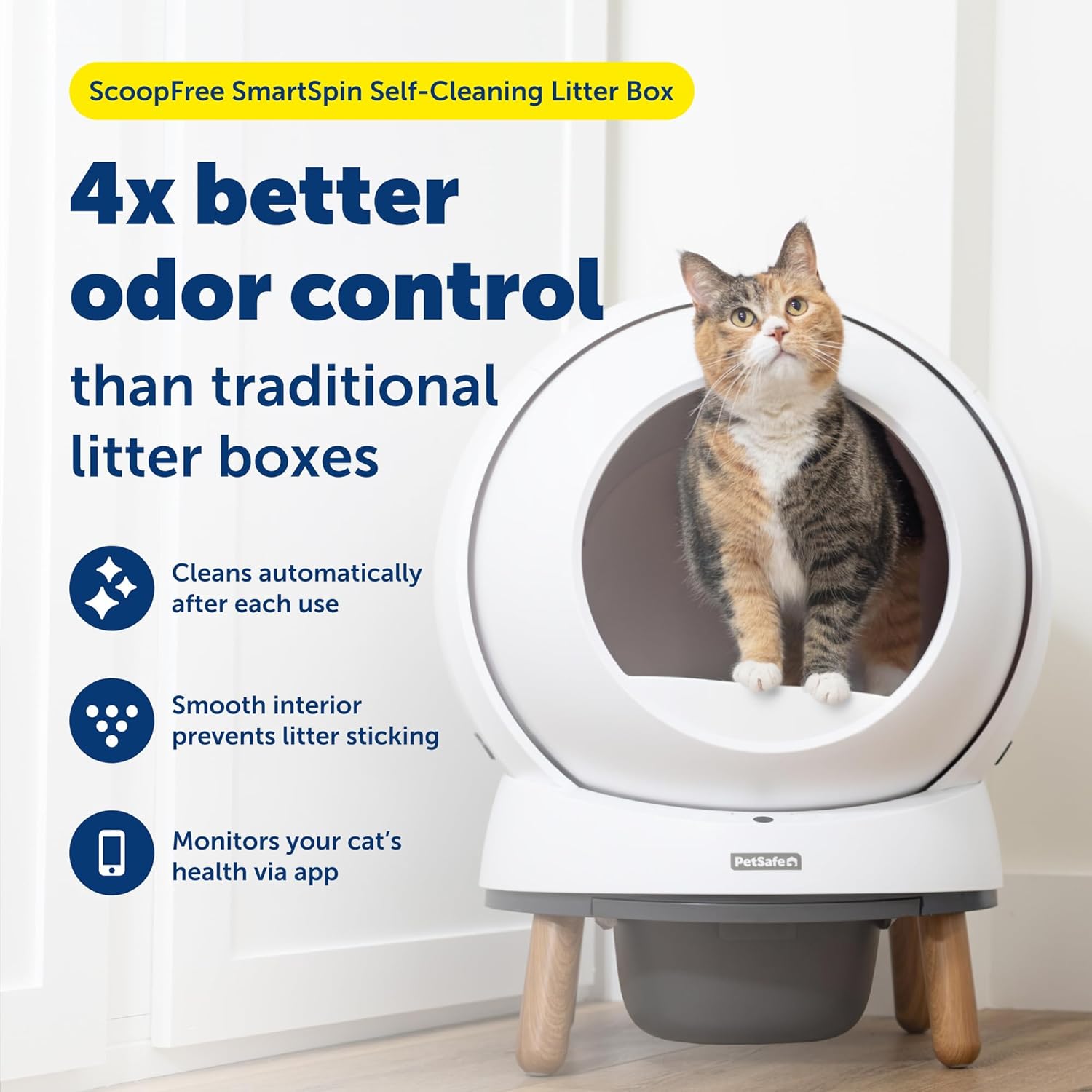
The newest model — and currently the most troubled from a reliability standpoint. The SmartSpin replaces the tray-based design with a rotating globe that spins to sift waste into a drawer below, which is a meaningful mechanical upgrade in concept. In practice, verified purchasers flag two persistent issues: app connectivity is unreliable to the point that some owners describe being unable to get it functioning across multiple setup attempts, and the rubber interior surface of the globe has a texture that litter clings to rather than tumbling cleanly through. One reviewer states plainly that the design “needs serious improvement.” At its current price point, the SmartSpin asks you to pay for a premium experience it isn’t consistently delivering.
PetSafe
$399.00
In stock on Amazon
Check price on AmazonBy the Numbers: Crystal Tray Life and True Monthly Cost
| Model | Tray type | Est. tray life (1 cat) | Est. tray life (2 cats) | Approx. monthly consumable cost |
|---|---|---|---|---|
| ScoopFree Original | Disposable tray | 30 days | 14–20 days | $15–$22/mo |
| Crystal Pro | Reusable tray + liner | 30 days (when liner holds) | 15–21 days | $10–$18/mo |
| Crystal Smart | Disposable tray | 20–28 days (owner-reported) | 12–18 days | $18–$28/mo |
| SmartSpin | Bulk crystal fill | Variable | Variable | $12–$20/mo (est.) |
Ranges reflect aggregated owner-reported figures, not manufacturer-rated specs. Multi-cat households should plan for the shorter end of every range.
Where Crystal Systems Actually Break Down
Two failure modes almost never appear in marketing materials but show up consistently in long-run owner reviews. You need to know both before committing to any crystal system.
The diarrhea problem. Crystal litter is engineered for solid waste and liquid urine — two very different consistencies. Silica crystals absorb liquid efficiently, but loose stool does not behave like solid waste in this system. It spreads, coats the crystals, and cannot be cleanly scooped the way it would be in clumping litter. Verified purchasers of the ScoopFree Classic explicitly flag this scenario: if your cat has gastrointestinal issues — even temporarily, from a diet change or illness — a crystal system can become a genuine sanitation problem very quickly. If your cat is elderly, has a sensitive stomach, or is prone to digestive upset, a crystal system may not be the right long-term choice regardless of which model you pick.
The “Forever Tray” absorption issue. This deserves its own explanation beyond the Crystal Pro section above, because the underlying chemistry affects any reusable plastic tray over time. Polypropylene, the plastic most litter tray bases are made from, is not fully impermeable to urine. Over months of use — even with liners in place — microscopic amounts of liquid work their way into the surface. Once urea compounds bond to the plastic, standard cleaning does not remove them. The smell returns regardless of how clean the liner is. Owners who report the Crystal Pro “permanently smelling” are not doing anything wrong; the product has a design ceiling that long-run reviews have clearly documented.
PrettyLitter: A Different Animal
PrettyLitter is worth separating from the ScoopFree line because it solves a genuinely different problem. It’s a subscription silica crystal litter — monthly bags delivered to your door — but the crystals are formulated to change color in response to chemical changes in your cat’s urine. Elevated pH, blood, bilirubin, and other markers each trigger different color shifts, giving you a passive early-warning system for conditions like urinary tract infections, kidney disease, and liver issues.
The ownership experience, per aggregated verified reviews, is notably more positive than any ScoopFree model. Reviewers consistently describe low dust, minimal odor, and — most strikingly — a sense that the litter box has become invisible in their home. One reviewer’s exact phrasing: “I forget there’s a litter box in there.” Apartment Therapy’s 2025 editorial roundup “The Best Low-Odor Litter Boxes for Small Apartments” identifies silica crystal litters as the strongest performers for odor containment in enclosed environments, with PrettyLitter specifically noted for dust performance.
The health-detection question requires calibrated expectations. PetMD’s clinical overview “What Your Cat’s Urine Color Can Tell You About Their Health” notes that color changes in litter can provide a useful first signal, but they are not diagnostic. A color shift tells you something may be worth discussing with your vet — it does not tell you what the problem is or how serious it is. Reviewers who treat color detection as a conversation-starter with their vet report finding it genuinely valuable. Reviewers who expect a definitive diagnosis are inevitably disappointed. Use it as a flag, not a verdict.
One practical limit: PrettyLitter is not an automated self-cleaning system. You still scoop solids daily. If your primary goal is reducing manual litter interaction, PrettyLitter solves the odor and health-monitoring side without solving the scooping side. It pairs well with a covered manual box if aesthetics and health data are your priorities; it doesn’t replace an automated rake or globe if hands-off operation is what you’re after.
Frequently Asked Questions
How long does one crystal tray actually last with one cat versus two? With one cat, most owners report 25–30 days before crystals are visibly saturated or odor returns. With two cats sharing one box, that window compresses to 14–20 days in aggregated reviews. Manufacturer-rated durations (typically 30 days) reflect single-cat use under optimal conditions. Plan your monthly budget on the shorter end if you have multiple cats.
Can the ScoopFree SmartSpin app actually be made to work reliably? Based on current verified purchaser reports, the SmartSpin app has persistent connectivity issues that multiple users were unable to resolve through standard troubleshooting — router changes, reinstalls, factory resets. This is not a universal failure, but the rate is high enough that you should not purchase this model specifically for its app features until a firmware update cycle addresses the documented problems.
What happens if my cat has loose stool in a crystal system? Crystal systems are not designed to handle diarrhea. Loose stool spreads through the crystal bed, coats the silica, and cannot be cleanly removed by scooping. In these situations the entire tray typically needs immediate replacement, and the box interior may require thorough cleaning. If your cat has chronic digestive issues, a clumping litter system will be significantly more manageable day-to-day.
Is PrettyLitter’s color-change detection accurate enough to catch real health issues? Per PetMD’s clinical guidance on feline urine chemistry, the color-change system is a meaningful early indicator — not a diagnostic tool. It can flag conditions worth investigating. Owners who have caught early-stage UTIs and kidney concerns through color changes report that the flags were real and confirmed by veterinary testing. The detection works as a signal; interpretation still requires a vet.
Why does the “Forever Tray” start to smell even after swapping disposable liners? Urine compounds, particularly urea, penetrate polypropylene plastic at the microscopic level over repeated exposure. Once absorbed, they off-gas regardless of liner condition or surface cleaning. It’s a material limitation of plastic trays, not a user error. If you own a Crystal Pro and are experiencing this, the tray itself — not just the liner — needs replacement.
Is the health counter on the Crystal Pro actually useful data? In practice, no — not in any medically meaningful sense. The counter tracks visit events but doesn’t capture weight, duration, or urine volume, which are the variables a vet would actually want. For basic tray-change timing it’s marginally helpful. For genuine health monitoring it doesn’t produce actionable data. If health analytics are a priority, a weight-sensing smart box is a more appropriate tool than any ScoopFree model.
The Decision Frame
If you want the clearest possible “if X, then Y”:
- If you want reliable crystal litter performance with minimal complexity and have one cat — the ScoopFree Original is the honest answer. Boring, plastic-wasteful, and still running for multi-year owners.
- If odor elimination and passive health monitoring matter more than automated scooping — PrettyLitter in a covered box is a stronger choice than any ScoopFree model.
- If you have two or more cats and want automated function — crystal systems as a category are fighting against their own consumable economics. A clumping-based automated system will likely serve you better long-term.
- If you’re drawn to the SmartSpin’s globe design — wait. The hardware concept is sound, but current firmware and surface texture issues are unresolved. Buying now means beta-testing at full retail price.
- If the Crystal Pro’s “Forever Tray” already smells — you’re not doing anything wrong. The product has a documented design ceiling. Cut the loss and move on.
Crystal litter is genuinely good at one thing: eliminating liquid odor without daily maintenance. It’s genuinely limited at another: handling anything outside normal solid-plus-liquid waste, and scaling economically to multi-cat homes. Know which problem you’re actually solving, and the right answer becomes straightforward.