July 31, 2026 • Margot Vellacourt • 10 min reading time • Prices verified June 4, 2026
When Your Self-Cleaning Box Breaks: Repair, Replace, or Downgrade?
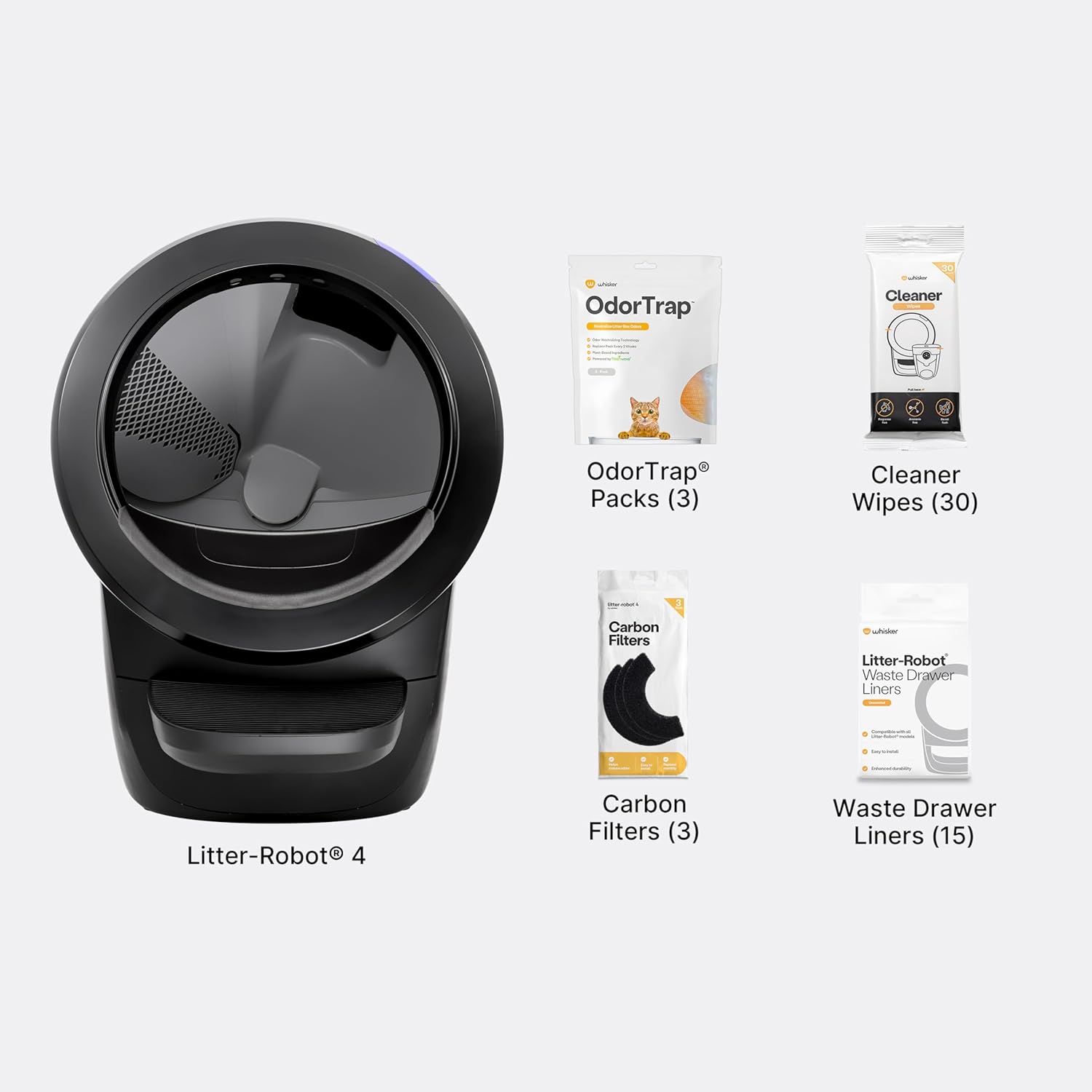
If you’ve invested anywhere from $150 to $700 in a self-cleaning litter box — the kind that rotates, rakes, or sifts waste automatically so you’re not scooping every day — the moment it stops working feels disproportionately terrible. You trusted a machine to handle something unpleasant, you built a routine around it, and now you’re staring at a blinking error code at 11 p.m. while your cats stare back at you. An automatic litter box is essentially a small appliance with a motor, a set of sensors, and a rotating or sliding mechanism. Like any appliance, it can fail. The question isn’t whether it will eventually need attention — it’s whether the specific failure you’re facing is worth fixing, whether your unit’s age and warranty status make replacement smarter, or whether stepping back to a simpler (even manual) box is actually the right call for your household right now.
This guide walks through that decision systematically, with real failure patterns drawn from long-term owner accounts and manufacturer support data. If you’ve got a unit that’s acting up, you’re in the right place.
Understand What Actually Failed Before You Do Anything Else
The single biggest mistake owners make is spending money — on a repair kit, a replacement unit, or even a service call — before confirming what actually broke. Most modern automatic litter boxes fail in a small number of predictable ways, and the diagnostic step takes less than ten minutes.
Sensor errors are the most common failure mode across virtually every brand in the sub-$400 range. Reviewers and long-term owners consistently report that sensor faults account for the majority of “dead box” complaints in the 30–90 day window for budget units. The sensor — usually an infrared or weight-based detector that confirms a cat has left before the cleaning cycle starts — gets confused by litter dust, stray clumps that sit near the sensor window, or simply a calibration drift over time. Before concluding the unit is dead: clean the sensor lens with a dry microfiber cloth, remove any litter debris around the sensor housing, and run a manual reset cycle. A significant share of reported failures clear this way.
Globe or drum over-torque errors are the signature long-term failure mode for rotating-globe units like the Litter-Robot 3. One long-term owner documented three solid years of reliable use from their LR3 before over-torque errors began appearing on nearly every cycle — a classic degradation pattern where the motor works progressively harder against a combination of litter density, waste buildup in the globe track, and mechanical wear. Whisker’s support documentation for the Litter-Robot 4 walks through this explicitly: check for litter packed into the rotation track, verify the waste drawer is fully seated, and confirm the unit is on a level surface. If over-torque errors persist after those steps, you’re looking at either a motor or gear assembly replacement — which Whisker does offer as a service part — or a decision about whether a three-plus-year-old unit warrants that spend.
Liner and drawer failures — jams, tears, or misfeeds — are almost always a consumable problem, not a hardware problem. If the waste drawer isn’t advancing or the liner is bunching, replace the liner pack before assuming the mechanism is broken.
App and connectivity failures are their own category. A unit that won’t connect to Wi-Fi or has lost its health monitoring feed is not a broken litter box — it’s a software issue. Check for firmware updates, re-pair the unit to your network at 2.4 GHz (most units don’t support 5 GHz), and consult the manufacturer’s current support documentation before escalating.
The Repair vs. Replace Math: Run the Numbers First
Once you know what failed, the financial logic is actually straightforward. Here’s the framework:
By the numbers:
- Litter-Robot 3 motor/gear kit (Whisker parts): ~$30–$50 in parts, roughly 45 minutes of DIY time
- Litter-Robot 4 out-of-warranty repair estimate (Whisker service): ~$100–$150 depending on component
- New mid-tier unit (PETKIT PURA X range, as of 2026): ~$199–$249
- Budget unit average lifespan before first critical failure: 6–18 months per aggregated review patterns
The repair-vs.-replace threshold most experienced owners land on is roughly one-third of current replacement cost. If fixing the unit costs more than 33% of what a comparable new unit costs today — and the unit is already past its warranty — replace it. If the repair is cheap and the unit is otherwise in good shape, fix it.
There’s one important exception to that rule: age-adjusted reliability. A Litter-Robot 3 that’s been running for four years and starts throwing over-torque errors every other cycle isn’t just experiencing a single failure — it’s signaling the beginning of a wear curve. Fixing the immediate error may buy you three months before the next one. Owners who’ve been through this report that the smarter move, once a unit is past year three and showing mechanical degradation, is to treat repairs as a bridge to a planned replacement rather than a restoration to baseline.
For budget units — anything in the oneisall, CATLINK lower tier, or similar sub-$150 range — the math almost never favors repair. One documented case involved an owner resetting their unit five times a day within the first month before the mechanism failed entirely. At that failure rate and that price point, aggressive pursuit of the return window is the only rational path.
Warranty, Customer Service, and the Post-Return-Window Trap
Your warranty status changes everything about this decision, and it’s worth knowing exactly where you stand before you spend a dollar.
Whisker (Litter-Robot 3 Connect, Litter-Robot 4) offers an 18-month warranty on new units and has a refurbished program with its own warranty coverage. The Petcove buyer profile — an owner who cited lifetime warranty as their primary purchase rationale and then used the unit to monitor a diabetic cat’s urination frequency changes — is a real use case that illustrates why warranty terms deserve as much attention as hardware specs. Per PetMD’s overview of feline diabetes management, tracking urination frequency is a clinically meaningful behavior that owners can actually observe and report to their vet. A unit that breaks and leaves that monitoring gap has compounding costs beyond the hardware itself.
Smaller brands with responsive customer service do exist. A PetPivot owner documented a litter-sticking failure at the three-month mark and received proactive resolution from the company, updating their review in April 2025. That’s a meaningful data point: smaller brands sometimes outperform larger ones on post-sale support precisely because each customer interaction is higher-stakes for them. The practical implication is that a strongly-worded, documented support ticket — with photos, error codes, and a timeline — is worth sending even if you’re not sure the company will respond.
The post-return-window trap is where a lot of owners get stuck. Most retailers offer 30 days; some budget units fail at day 45. The playbook here: first, go to the manufacturer rather than the retailer — manufacturer warranties typically extend past the retail return window. Second, if the unit failed due to a design defect (sensor errors affecting an entire production batch are occasionally the subject of quiet firmware fixes or replacement programs), ask explicitly whether there’s a known issue with your unit’s production date. Third, if you paid by credit card, check your card’s purchase protection terms — many cards extend manufacturer warranty by 12 months automatically.
The Downgrade Question: When Simpler Is Actually Better
This is the conversation most self-cleaning litter box content refuses to have. Sometimes the honest answer is: go back to a manual box, at least temporarily.
The ScoopFree Crystal Pro has owners who’ve run the same unit for four years without a mechanical failure. That’s not a universal experience, but it reflects something real about simpler rake-based designs — fewer moving parts means fewer failure modes. The Spruce Pets’ coverage of automatic litter boxes consistently notes that sifting and rake-based mechanisms have lower mechanical complexity than rotating globes, which translates directly to longer intervals between failures in typical household use.
If you’re in a period where: (a) your unit just failed, (b) your replacement budget is temporarily constrained, and (c) you have cats who are already litter-trained and acclimated — a $30 covered manual box with a quality clumping litter is a completely defensible bridge. It doesn’t need a firmware update. It doesn’t throw error codes. And it won’t trigger a 2 a.m. motor grind that wakes everyone up.
The owners who report the most satisfaction with premium units like the Litter-Robot 4 — including one who upgraded from the LR3 and then converted multiple friends to the platform — share a common profile: they bought once, bought the tier that matched their actual household needs (cat count, litter type, monitoring goals), and didn’t treat the purchase as an experiment. The “buy it once, buy it right” psychology is real, but it only works when the initial purchase is right-sized. If your original purchase was under-spec’d for your household, the failure is partially a sizing problem, and the correct replacement is one tier up — not the same unit again.
Frequently Asked Questions
Is it worth repairing an automatic litter box or should I just replace it? It depends on the unit’s age, the cost of the repair, and whether you’re seeing a single failure or the beginning of a wear pattern. For units under 18 months old and under warranty, always pursue repair or replacement through the manufacturer first — it costs you nothing. For out-of-warranty units, apply the one-third rule: if repair exceeds 33% of a comparable new unit’s price, replace.
What does a Litter-Robot over-torque error actually mean and can I fix it myself? An over-torque error means the globe’s motor detected more resistance than expected during rotation and stopped to avoid damage. Common causes: litter packed into the rotation track, a waste drawer that isn’t fully seated, or a unit that’s on an uneven surface. Whisker’s support documentation walks through the self-service steps clearly. If the error persists after those checks on a unit past year three, treat it as a signal of broader mechanical wear.
Which automatic litter box brands have the best warranty and customer service? Whisker (Litter-Robot) offers the most structured warranty program in the category, with 18 months on new units and a documented refurbished program. Smaller brands vary significantly — the key signal is whether the company responds to support tickets with specific troubleshooting, not just replacement offers. Recent owner accounts (as of April–May 2025) suggest PetPivot’s support resolved a hardware failure proactively, which is a positive indicator for a smaller brand.
How do I get a replacement or refund if my unit fails just after the return window? Go directly to the manufacturer, not the retailer. Document the failure with photos, error codes, and a written timeline. Ask explicitly whether your unit’s production date falls within any known issue range. Check your credit card’s purchase protection terms — many cards extend manufacturer warranties by 12 months at no cost.
Should I keep a backup manual litter box even after buying an automatic one? Yes, at least during the first 90 days. Apartment Therapy’s coverage of small-space litter solutions consistently recommends a backup option during acclimation periods — and it doubles as a functional fallback if the primary unit fails. For households with three or more cats, a backup box is simply good risk management regardless of how reliable the primary unit is.
Are premium units like the Litter-Robot 4 actually more durable than budget alternatives over 2–3 years? Across aggregated review patterns, the answer is yes — but with a meaningful caveat. Premium units like the Litter-Robot 4 have documented multi-year track records from owners who report reliable performance well past the 18-month mark. Budget units in the sub-$150 range show a much higher rate of critical failures before month 12, particularly in sensor and motor components. The durability gap is real. Whether it justifies the price delta depends on your cat count, your monitoring needs, and whether you want a unit you’re managing constantly or one you’re not thinking about.