June 16, 2026 • Margot Vellacourt • 12 min reading time • Prices verified June 4, 2026
Sub-$300 Self-Cleaning Boxes After Six Months: Who's Still Running and Who Broke
Sub-$300 Self-Cleaning Boxes After Six Months: Who’s Still Running and Who Broke
If you’ve never owned a self-cleaning litter box, here’s the quick version: instead of you scooping your cat’s waste by hand every day, a motorized mechanism — usually a rotating globe, a raking arm, or a spinning drum — does it automatically on a timer or after each cat visit. They run anywhere from $80 to $700. The sub-$300 end of that range is where most first-time buyers land, and it’s also where the most dramatic owner stories live — both the “this changed my life” kind and the “I can’t believe I paid $200 for this” kind. This article is specifically about the six-month mark: which units are still running reliably, which ones have already failed, and what the failure patterns tell you before you buy.
If you already know the category and you’re trying to decide between two or three specific units right now, this is your article. We’re going to skip the basics and get into the durability evidence.
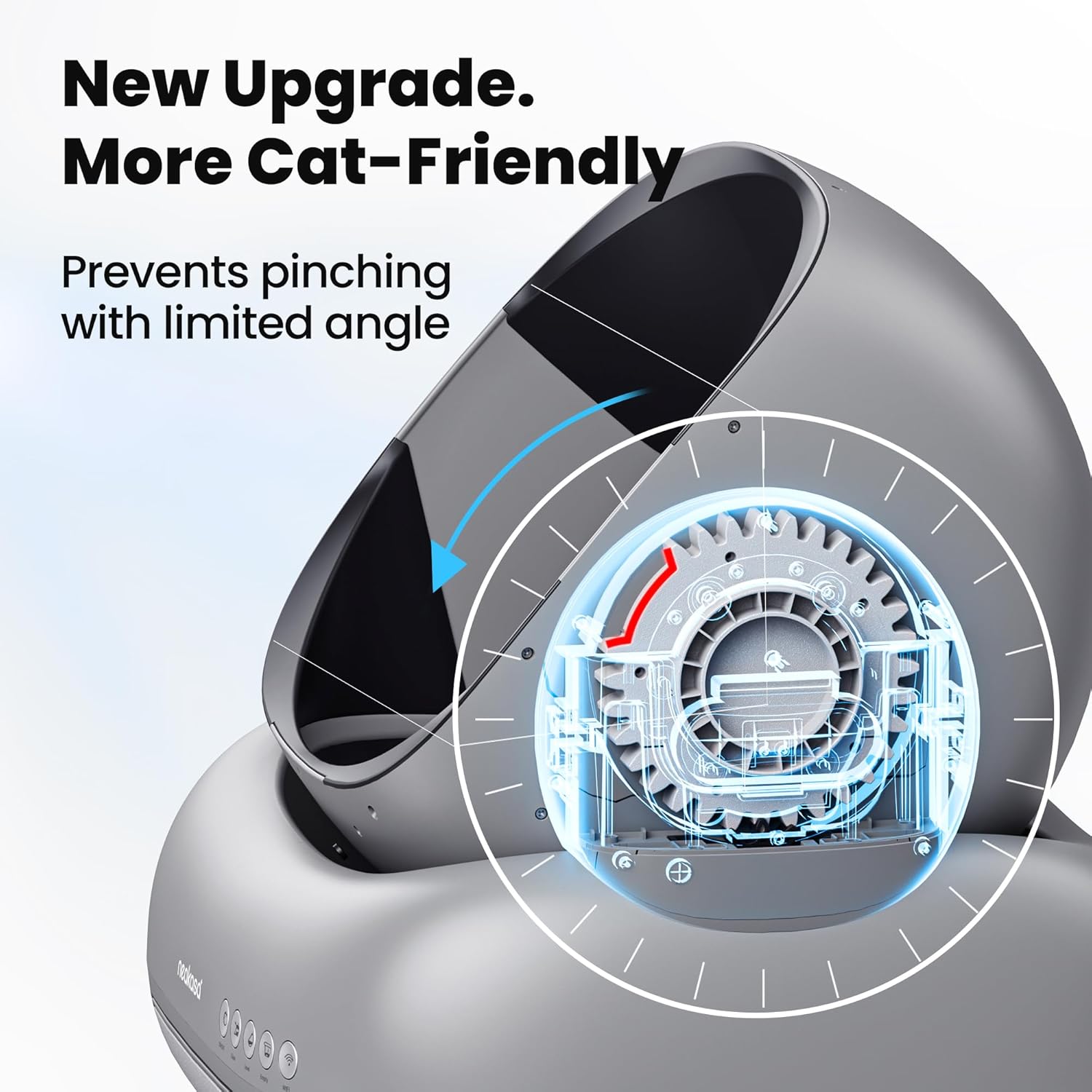
| EDITOR'S PICK[Neakasa M1 Plus Open-Top Self-C…](https://www.amazon.com/dp/B0CSKBWBF6?tag=greenflower20-20) | Mid-tierSelf Cleaning Cat Litter Box | Budget pick[UPFAS Automatic Cat Litter Box…](https://www.amazon.com/dp/B0GKDQ4VGT?tag=greenflower20-20) | |
|---|---|---|---|
| Safety Sensors | 360° | ✓ | Anti-pinch |
| Odor Control | Advanced Odor Control | — | — |
| App Control | — | — | ✓ |
| Weight Monitor | — | — | ✓ |
| Assembly | — | — | Required |
| Price | $449.99 | $139.99 | $127.49 |
| See on Amazon → | See on Amazon → | See on Amazon → |
The Dominant Failure Mode Across the Whole Tier: Mid-Cycle Stopping
Before naming winners and losers, it’s worth understanding what actually breaks in these machines, because the same failure shows up across almost every brand in this price range.
The complaint you’ll see more than any other in long-run reviews is this: the unit starts its cleaning cycle, gets partway through, and stops. Sometimes it freezes in a position that traps waste. Sometimes it throws an error light. Sometimes it just… sits there, motor humming, doing nothing. PetPivot Open Top buyers — many of whom explicitly named two prior budget units that failed — consistently describe mid-cycle stopping as the problem that drove them to switch. They weren’t unlucky; they were describing the category.
Why does this happen? Based on published spec sheets and aggregated owner reports, the pattern points to two culprits working in combination:
-
Underpowered motors meeting real-world litter loads. Budget units are often rated at motor torque specs that look fine in isolation but leave almost no headroom for clumping litter that’s slightly heavier than average, or for the extra waste a multi-cat household deposits. When the motor meets resistance it didn’t expect, it stalls — and many units aren’t programmed to retry cleanly.
-
Immature sensor and firmware logic. The more expensive units (think Litter-Robot 4 territory) have years of firmware iteration behind them. A lot of sub-$300 entrants are on version 1.0 of their logic, which means their obstruction detection is either too sensitive (stopping when nothing’s wrong) or not sensitive enough (trying to power through and jamming). Owners who specifically praise the Neakasa M1 Plus — including one multi-cat household owner running the unit with a 7-year-old and an 18-year-old cat — often single out the “do not disturb” scheduling feature as the reason it works: it lets the firmware run on a predictable schedule rather than reacting in real time, which reduces the number of edge cases the sensor logic has to handle. That’s firmware maturity at work, even in a mid-range unit.
The Spruce Pets’ 2025–2026 automatic litter box roundup echoes this pattern, noting that timing-based cleaning modes tend to produce fewer mid-cycle errors than motion-triggered modes on units without robust sensor arrays — which is consistent with what long-run owners report.
The Worst Case: What the Oneisall Failure Pattern Looks Like
The most alarming durability signal in this tier right now involves Oneisall units. A recurring reviewer archetype — appearing in aggregated review sets and summarized by cat owner forums across 2025 — is the owner who buys an Oneisall unit, has it fail within 10 days, receives a replacement, and has that replacement fail equally quickly. This isn’t a one-off; multiple long-run reviewers follow the same arc and explicitly warn others away from the product.
Ten days to failure on a replacement unit is a meaningful signal. When a replacement fails as fast as the original, you’re not looking at a bad batch — you’re looking at a design ceiling. The failure mode is baked into the product, not introduced during shipping.
At roughly $200, a unit that fails in under two weeks represents the worst possible cost-per-day math in the category. Two replacements means double the return hassle, assuming you’re still in the return window (more on what to do when you’re not, below).
Wirecutter’s self-cleaning litter box guide notes that the most common factor separating budget units that survive 12+ months from those that don’t is build quality in the motor housing and the quality of the obstruction-detection logic — and that these are almost impossible to evaluate from a product listing alone, making long-run owner reports the most reliable signal available to buyers.
By the numbers:
| Unit type | Typical failure window reported by owners | Primary failure mode |
|---|---|---|
| Oneisall (rotating globe, budget) | Under 2 weeks | Motor/mechanism failure |
| Generic rake-style units under $150 | 2–4 months | Motor stall, mid-cycle stop |
| Neakasa M1 Plus | 6+ months (multi-cat, reported) | Minimal; sensor sensitivity noted |
| PetPivot Open Top | 6+ months (reported) | Replacement for prior failures |
The Lifetime Warranty Question: Confidence Signal or Marketing Noise?
At least one significant cluster of sub-$300 buyers names the warranty as the decisive purchase factor — not the price, not the features. A Petcove owner review thread is explicit: the lifetime warranty was the reason they chose that unit over comparably priced competitors. They didn’t trust the hardware based on specs alone; they wanted a promise that someone would stand behind the product.
This is a rational response to a category with genuinely uneven quality control. But a lifetime warranty from a smaller brand needs scrutiny.
The honest answer is: it depends entirely on customer service responsiveness, which you cannot evaluate before buying. PetMD’s buyer overview on automatic litter boxes notes that warranty value is largely contingent on the company’s ability to fulfill replacements — a lifetime warranty from a brand that stops responding to support tickets is functionally worthless. Here’s how to assess it before committing:
- Search “[brand name] warranty claim” in review aggregators. Not just star ratings — look specifically for reviews that mention warranty service. If you find multiple owners who got replacements shipped without friction, the warranty is real. If you find owners describing weeks of silence after submitting claims, treat the warranty as decorative.
- Check the brand’s Amazon seller rating and response rate. Brands with high response rates on seller pages tend to have functional customer service pipelines. Brands with zero seller responses are a warning sign.
- Understand what “lifetime” means in the fine print. Some brands define “lifetime” as the product’s commercial life cycle, not yours — meaning they can stop honoring it when they discontinue the SKU.
Apartment Therapy’s 2025 self-cleaning litter box feature found that buyer confidence in budget units correlates strongly with visible warranty and support signals — more so than with hardware spec comparisons — which is consistent with the Petcove owner pattern noted above.
What Six-Month Survivors Have in Common
Across aggregated reviews of sub-$300 units that owners report running reliably past the six-month mark, a consistent pattern emerges. These aren’t random — they share a few structural traits:
Timing-based cleaning modes as the default. Units that give owners the option to run on a fixed schedule rather than relying entirely on motion or weight sensors tend to accumulate fewer mid-cycle errors over time. The Neakasa M1 Plus owner who reported multi-month reliability with two cats (including an elderly 18-year-old, whose weight and gait are outside the “average cat” sensor calibration range) credited the scheduling feature specifically. If a unit’s primary selling point is “always-on motion detection” without a scheduling fallback, treat that as a durability risk.
Replaceable components that are actually available. Budget units that have been on the market for 18+ months with consistent filter and liner availability signal that the brand is invested in the product’s lifecycle. Units where replacement parts are already hard to find within the first year are telling you something about how long the manufacturer expects the product to be relevant.
Firmware that has received at least one post-launch update. This is hard to verify before buying, but owner reviews often mention it — “the latest update fixed the mid-cycle stopping issue” is a sentence that appears in several long-run reviews of units that survived. It tells you the brand is actively maintaining the product rather than shipping and abandoning.
A track record from multi-cat households specifically. A unit that one owner ran with one small cat for six months is less informative than one that a two- or three-cat household ran through the same period. Multi-cat environments stress motor, sensor, and waste-drawer capacity simultaneously. If the reviews that report six-month reliability come primarily from single-cat, average-weight-cat households, apply a discount.
What To Do When Your Unit Fails After the Return Window
This is the question no one asks until they need the answer. Amazon’s standard return window is 30 days. A unit that fails at month three is outside that window, and outside the easy path back.
Your options, in rough order of success rate based on owner reports:
- Contact the manufacturer directly, not Amazon. Most failures at the three-to-six-month mark fall under manufacturer warranty even if they’re past the retailer return window. Document the failure with photos or video before you start the conversation — it dramatically speeds up claims.
- Escalate to Amazon’s A-to-Z Guarantee if the seller is third-party. If you bought from a third-party seller (not the brand directly) and the product is materially defective, Amazon’s A-to-Z process can sometimes cover claims beyond 30 days for defects — not wear. “It stopped working after two months” with documentation is a stronger claim than “I don’t like it.”
- Check your credit card’s purchase protection. Some cards extend manufacturer warranties or provide purchase protection for defective items. This is underused in the pet product category.
- Treat it as research. A unit that fails at month three tells you something the listing never would. Note the failure mode, the support response, and whether the replacement (if you get one) survives. You’re now two purchases into an expensive education — don’t lose the data.
Frequently Asked Questions
How long do sub-$300 automatic litter boxes realistically last with two or three cats using them daily?
Honestly, the range is wide. The worst units (see: the Oneisall failure pattern) can fail within two weeks. Mid-range units with more mature firmware — like the Neakasa M1 Plus — show multi-month reliability even in multi-cat, senior-cat households. A reasonable expectation for a well-chosen sub-$300 unit in a two-to-three cat home is 12 to 18 months before significant mechanical attention is needed, but that requires picking one of the survivors — not just the cheapest option on the results page.
What does it mean when the unit stops mid-cycle and can I fix it without returning the product?
Mid-cycle stopping is the category’s most common complaint, and it has several causes. First, check the waste drawer — if it’s full or improperly seated, most units will stop as designed. Second, check for litter clumps that have jammed the mechanism; clearing the obstruction manually and running a reset cycle fixes a meaningful percentage of stops. Third, check firmware: some brands have issued updates specifically targeting mid-cycle stall logic, and updating via the app (if your unit has one) is worth doing before assuming hardware failure. If none of these help and the unit is under warranty, file the claim.
Is a lifetime warranty from a smaller brand actually worth anything, or is customer service unresponsive?
It can be worth a lot or nothing, depending entirely on the brand’s support infrastructure. The Petcove buyer pattern suggests that warranty signaling genuinely influences purchase confidence — and for buyers who have been burned before, that’s rational. But verify: search for actual warranty fulfillment reports in review threads before treating the warranty as a deciding factor. A lifetime warranty with documented fast fulfillment is a real differentiator. A lifetime warranty with a dead support email is marketing copy.
Are there budget automatic litter boxes that have genuinely run for 12 months without issues — and what do they have in common?
Yes. The ones that show up consistently in long-run owner reports share a few traits: timing-based cleaning modes (not purely sensor-reactive), available replacement parts, at least one post-launch firmware update, and verified reliability in multi-cat households specifically. The Neakasa M1 Plus’s scheduling feature and the PetPivot Open Top’s track record with owners who explicitly replaced prior failures are two of the strongest positive signals in this tier right now.
What should I do if my unit fails after the Amazon return window closes?
Contact the manufacturer directly with documentation (photos or video of the failure). If you bought from a third-party seller, consider Amazon’s A-to-Z Guarantee for defective-product claims. Check your credit card’s purchase protection — it’s underused in this category and can cover extended warranty claims. And document everything: failure mode, date, support response time, and outcome. That data is worth keeping even if you ultimately move on to a different unit.
How do I tell from reviews whether a unit’s failure reports are early-batch quality issues or a persistent design flaw?
Look at the timeline of negative reviews. If the one-star reviews clustered in the first few months after launch and then dropped off, that’s consistent with an early-batch issue that may have been resolved. If one-star reviews appear consistently across all purchase dates — including recent buyers — that’s a persistent design flaw. Also look for the replacement pattern: the Oneisall archetype, where a replacement unit fails just as fast as the original, is a clear signal that the problem is structural, not a bad batch.
The decision rule, stated plainly: if you’re buying in the sub-$300 tier, the unit’s survival rate past month three matters more than its feature list. A rotating globe with four sensors and an app integration that fails at week two is a worse purchase than a simpler drum mechanism with a scheduling mode that’s still running at month eight. Read for failure timeline, not for feature bullets — and when two units look equivalent on specs, the one with verified warranty fulfillment wins.